




A step-down regulator, also known as a step-down voltage regulator or buck converter, is an electronic device that takes a higher voltage and converts it to a lower, steady one. In simple terms, it ensures that your devices receive just the right amount of power without being damaged. Whether in a laptop, solar panel, or industrial machine, step-down regulators are key to keeping everything running smoothly and safely.
This article explains how step-down regulators work, their main types, and why high-quality voltage regulation—like the one Mingch Electrical delivers—is essential in today’s power-driven world.
What Is a Step-Down Regulator?

A step-down regulator is a type of DC-DC converter that reduces a high input voltage to a controlled lower output voltage. Its purpose is to safely “step down” voltage while maintaining efficiency and stability.
Here’s what you need to remember:
- It’s used when your device needs less voltage than your power source provides.
- It maintains a consistent voltage even when the input power fluctuates.
- It prevents heat waste—unlike older linear regulators.
In short, a step-down regulator keeps electronics efficient, cool, and reliable.
How Does a Step-Down Regulator Work?
A step down switching regulator works by rapidly turning power on and off thousands of times per second. Through this fast switching process, it precisely controls how much energy moves through the inductor, diode, and capacitor, ensuring a stable, reduced-voltage output for connected devices.
Here’s a simplified explanation:
- Switching Transistor: Rapidly opens and closes to control energy flow.
- Inductor: Stores energy during the “on” cycle and releases it during the “off” cycle.
- Capacitor: Smooths the output to provide a steady voltage.
- Feedback Circuit: Monitors and adjusts voltage in real time.
Because it switches rather than dissipates energy, this design reaches efficiency levels of up to 95%, making it perfect for both small devices and large machinery.
Different Types of Step Down Regulators
There are several forms of step-down regulators, each with specific roles depending on your power requirements.
1. Adjustable Step Down Voltage Regulator This type allows users to set the desired output voltage manually. It’s ideal for DIY projects, testing circuits, or powering various devices from one source.
2. Step Down Regulator Module A pre-assembled circuit that converts DC voltage safely and efficiently. It’s commonly used in LED systems, microcontrollers, and robotics.
3. Step Down Current Regulator Instead of controlling voltage, this one maintains a constant current output—useful for LED lighting or battery charging applications.
4. Step Down Switching Regulator This is the most common modern design, combining compact size with high efficiency, often built into power supply boards for electronics and industrial equipment.
Why Use a Step Down Voltage Regulator?
Modern electronics require stable, efficient power. Without a voltage regulator step down system, even a minor voltage spike can damage circuits. Here’s why these devices are indispensable:
- Energy Efficiency: Converts excess voltage into usable power without producing excessive heat.
- Compact Design: Small enough for integration in laptops, vehicles, or solar systems.
- Protection: Shields sensitive components from power fluctuations.
- Longer Equipment Lifespan: Prevents damage caused by overvoltage or instability.
In industries where reliability matters, such as hospitals, manufacturing, and data centers, step down regulators are not just helpful; they are essential.
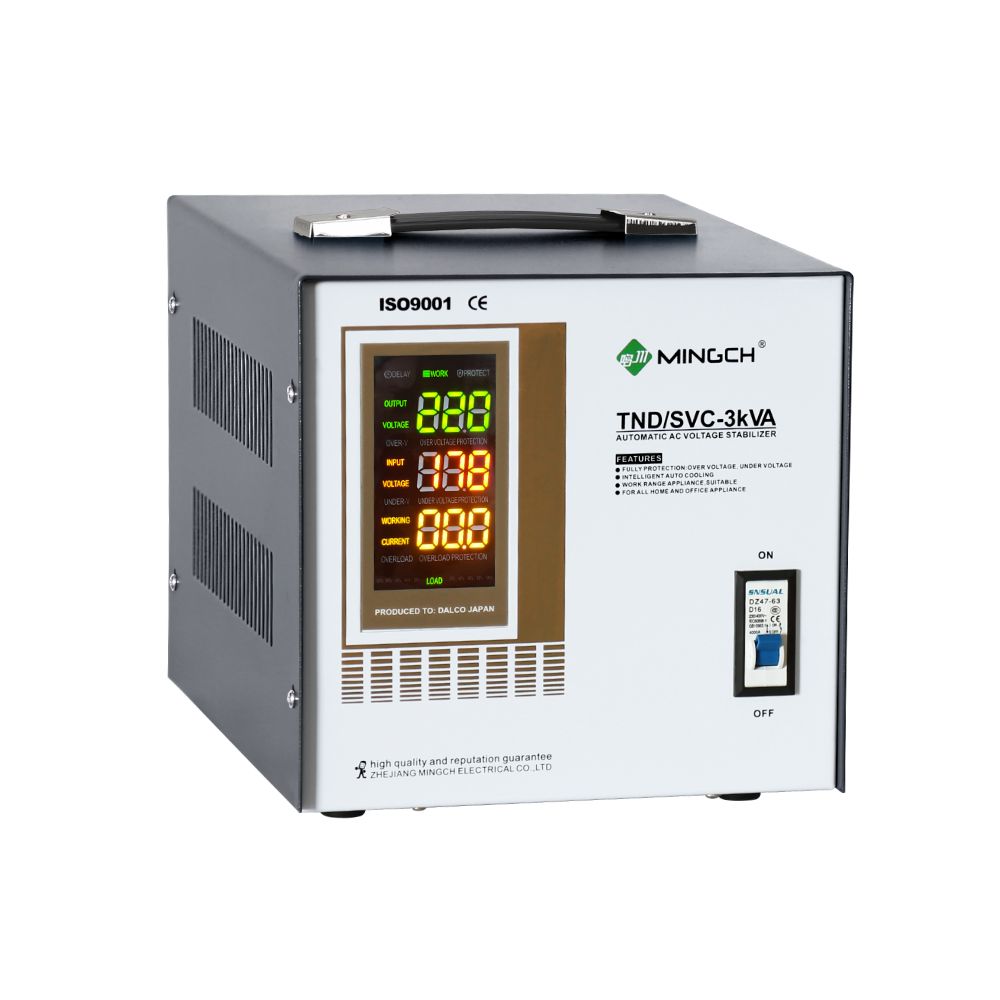
TND/SVC-3KVA High Precise Single Phase Automatic AC Voltage Regulator
- Provides ±1% High-Accuracy Output
- Protects Sensitive Electronics & Lab Equipment
How to Build or Use a Step Down Voltage Regulator
If you’re exploring how to build a step down voltage regulator, the basic components include a transistor (MOSFET), diode, inductor, capacitor, and a control IC. However, precision and safety are crucial. That’s why professionals often use pre-built step-down regulator modules, which are factory-tested for efficiency and protection.
For general users or engineers seeking plug-and-play options, brands like Mingch Electrical offer reliable, accurate regulators designed for real-world conditions.
When learning how to use a step down voltage regulator, remember:
- Match the regulator’s voltage range to your power source’s voltage range.
- Check load current requirements before connecting.
- Use proper heat management if dealing with high-current systems.
Applications of Step-Down Regulators
Step-down regulators are everywhere:
- Consumer Electronics: Smartphones, laptops, and TVs use them to convert power efficiently.
- Automotive Systems: Convert 12V or 24V battery power down to 5V or 3.3V for sensors and infotainment.
- Renewable Energy: Solar power systems use step-down converters to stabilize voltage before storage.
- Industrial Equipment: Machinery relies on these regulators to maintain stable performance under varying grid conditions.
In environments with harsh or unstable grids, MINGCH’s voltage regulators shine, thanks to their ultra-wide input range (45V–270V or 304V–456V) and ±1% high-accuracy output, ensuring dependable operation under any grid conditions.
Advantages of MINGCH Step Down Regulators
Mingch Electrical has been perfecting voltage control since 1993, delivering reliable, cost-effective, and high-performance power solutions across industries. Their regulators are engineered for both low-power and high-power applications, including hospitals, schools, and factories.
Key advantages include:
- Ultra-Wide Input Range: Stable performance under fluctuating voltages.
- High Precision Output: ±1% accuracy for sensitive equipment.
- Durable Build: Tested under simulated real-world conditions for long-term reliability.
- Custom Options: Tailored voltage and current regulation based on customer needs.
With these advantages, Mingch regulators maintain performance even in the toughest environments, from industrial automation to renewable power systems.
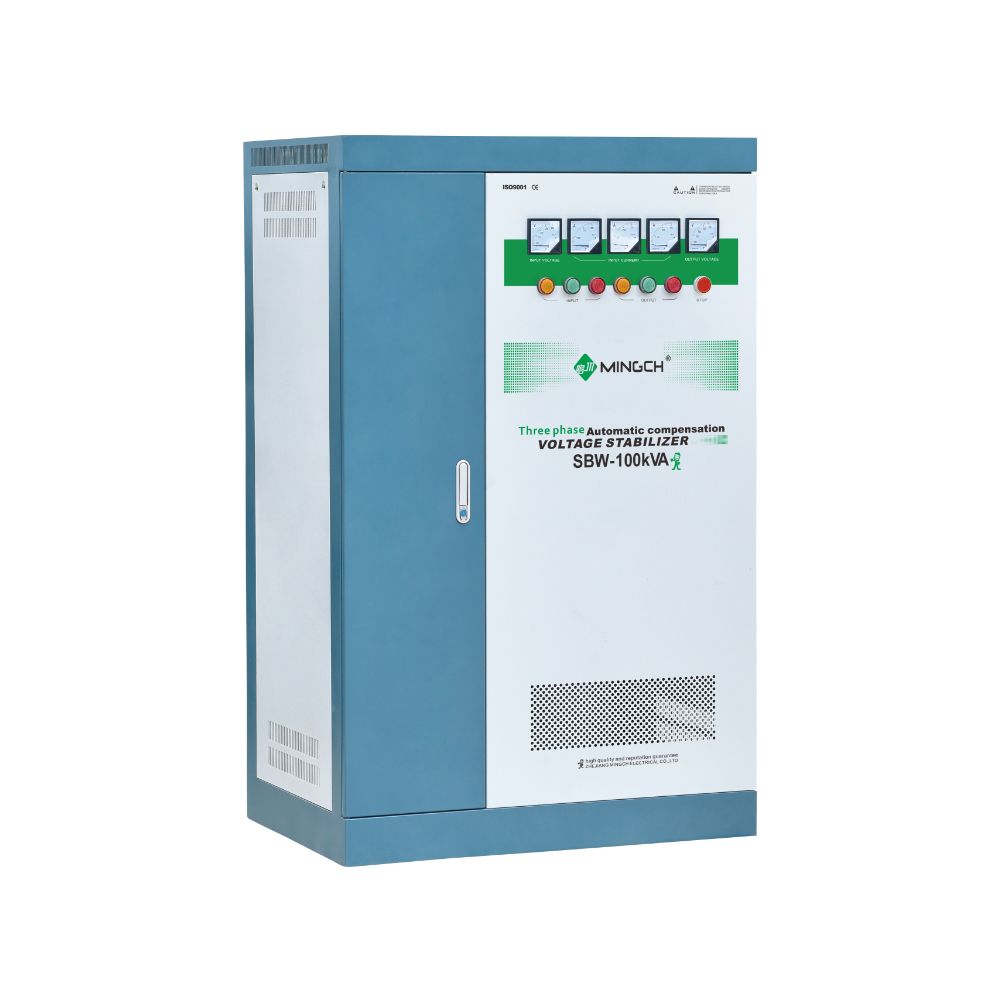
SBW-100kVA Three Phase Automatic Compensation Voltage Regulator
- Handles Fluctuating Voltages (Wide Input)
- Designed for Factories & Heavy Machinery
Conclusion
A step-down regulator is the foundation of modern power management. By understanding how they work, you can design or choose systems that run cooler, safer, and longer. At MINGCH Electrical, innovation meets precision. Their collection of step-down voltage regulators offers ultra-wide input ranges and high-accuracy outputs, perfect for homes, industries, and renewable projects.
Discover MINGCH’s Manufacturing Excellence
Explore our state-of-the-art facilities, advanced production processes, and commitment to quality that powers our reliable electrical solutions.
Learn About Our Factory


