




Every industrial motor project depends on choosing the right variable frequency drive types for the load, power range, and site conditions involved. VSI, CSI, and DTC drives each switch power differently, giving them distinct torque, precision, and reliability profiles.
This guide walks through the different types of variable frequency drives. It then shows global buyers how to match each design to a specific project scope, from one line to a multi-site group.
What Are the Main Types of Variable Frequency Drives?
Three power topologies cover nearly all industrial installations. Each one converts incoming AC power into a controlled output differently, and that difference defines its ideal application.
Voltage Source Inverter (VSI) Drives
VSI drives convert incoming power to DC, then switch it back into AC at a controlled frequency and voltage. This design is the default choice across fans, pumps, conveyors, and general manufacturing equipment. Its compact layout and lower cost make it the standard option for most facilities.
Current Source Inverter (CSI) Drives
CSI fed variable frequency drives regulate current instead of voltage, which suits high-power, high-inertia loads. Older cement and steel plants still rely on this topology for its simple design and rugged build. CSI setups also support regenerative braking and can return energy to the supply during deceleration.
Direct Torque Control (DTC) Drives
DTC drives regulate torque directly, without the voltage and frequency modulation used by VSI or CSI designs. This gives them fast torque response, even near zero speed. Cranes, hoists, and mills that face sudden load changes benefit most from DTC control.
How Do PWM Variable Frequency Drives Control Motor Speed?
Most modern VSI drives use pulse-width modulation to shape their output. PWM variable frequency drives switch a DC bus on and off at high speed. This builds an average voltage that approximates a sine wave.
IGBT transistors handle this switching with low loss and tight precision. Published part-load efficiency data also confirms this design holds efficiency above 90 percent across most of its speed range. For a closer look at this component, see our guide to what an IGBT does inside a VFD.
Scalar (V/Hz) Control
Scalar control keeps a fixed ratio between voltage and frequency below the motor’s base speed. It works well for fans and pumps that do not need tight speed accuracy. This method is simple, low-cost, and easy to commission.
Vector Control
Vector control separates the torque-producing and flux-producing parts of the motor current. This allows steady performance even when load conditions change quickly. Conveyors, extruders, and packaging lines often use vector control for consistent output. For a side-by-side technical comparison, see our breakdown of vector control versus scalar control in VFDs.
Where Constant Voltage Variable Frequency Operation Applies
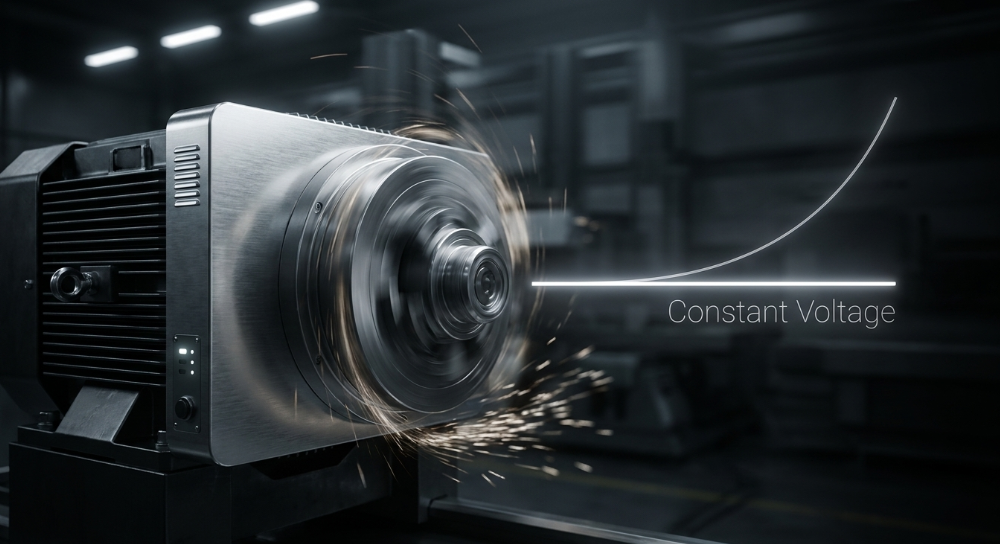
Above base speed, a drive cannot keep raising voltage without exceeding motor and drive ratings. Constant voltage variable frequency drives solve this by holding voltage steady while letting frequency continue to climb. This region trades torque for speed, which suits centrifuges, spindles, and other high-speed loads that need less torque at their top end.
How Should Multi-Site Industrial Projects Select a VFD Type?
Large industrial groups often run several business lines with different load profiles under one project. A single design rarely covers every case, so engineering teams build a classification matrix before specifying equipment across sites.
| Application Type | Recommended VFD Type | Preferred Control Method | Typical Project Use |
| Fans, pumps, HVAC | VSI | Scalar (V/Hz) | Utility buildings, general facilities |
| Conveyors, extruders, packaging | VSI | Vector control | Multi-line manufacturing plants |
| Cranes, hoists, mills | DTC | Direct torque control | Heavy industry, material handling |
| High-inertia, regenerative loads | CSI | Vector with feedback | Steel, cement, large power grids |
| High-speed spindles, centrifuges | VSI | Constant voltage variable frequency | Precision machining, processing lines |
Selecting among these variable frequency drive types starts with defining the load profile of each business line. A power grid project with high-inertia motors needs different protection than a packaging line running light, variable loads. Standardizing on compatible communication protocols, such as Modbus or EtherCAT, also makes multi-site projects easier to maintain.
A Multi-Plant Case Example
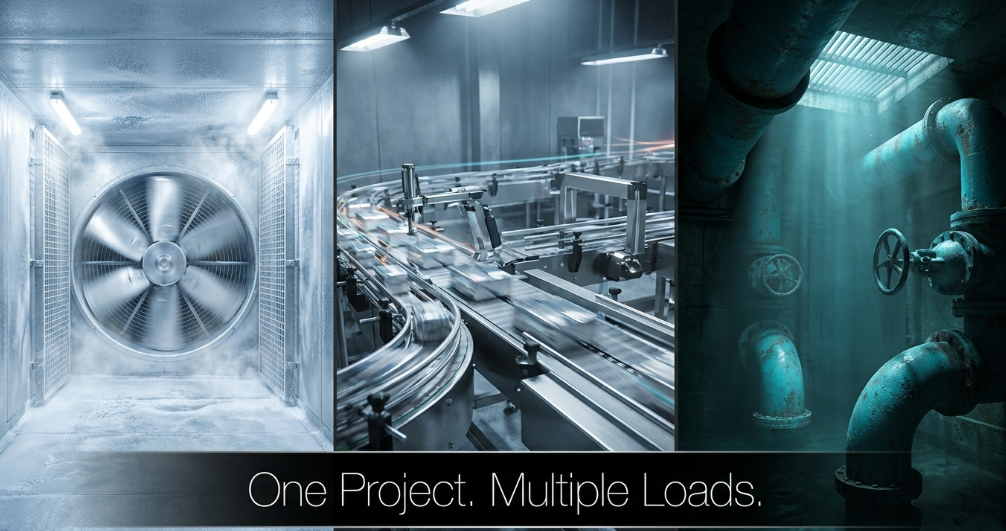
Consider a regional food processing group running three sites: cold storage, packaging, and water treatment. Cold storage fans used scalar-controlled VSI drives for basic speed adjustment. The packaging line needed vector control to hold torque steady under variable loads. Standardizing on one drive platform, while varying the control method per site, cut spare parts inventory and simplified technician training group-wide.
Why Do Global B2B Buyers Choose MINGCH for VFD Projects?
MINGCH Electrical has manufactured power control equipment since 1993, with an in-house R&D team and a 10,000 square meter factory. The MC9001 series uses vector control to deliver strong starting torque and stable performance under changing loads. The MC3000 series pairs vector-based speed control with a lower cost, suited to medium- and large-scale facility projects.
Both series carry CE-LVD certification and meet IEC 61800-5-1 requirements, and the factory holds ISO9001 certification. MINGCH supplies 0.75kW to 500kW drives, with Modbus, Profibus-DP, and EtherCAT support for multi-site integration across HVAC, water treatment, petrochemical, mining, and textile projects.
Explore the full MINGCH variable frequency drive collection to match a series to your next project.

Frequently Asked Questions
What Is the Most Common VFD Type?
VSI is the most common design among current variable frequency drives. It costs less to build, switches power efficiently, and covers most fan, pump, and conveyor loads. Most facilities default to VSI unless a project needs the fast torque response of DTC or the ruggedness of CSI.
What Is the Difference Between CSI and VSI Drives?
VSI drives control voltage and suit general-purpose loads, while CSI drives control current and suit high-power, high-inertia loads. CSI designs handle regenerative braking well and tolerate harsh environments. VSI designs cost less and are far more common in modern industrial and commercial installations.
Are PWM Drives Standard in Modern VFDs?
Yes. Most VSI drives sold today use pulse-width modulation with IGBT switching. This approach is efficient and precise, and it supports the vector and scalar control methods most projects need. PWM has been the standard approach for VSI drives for several decades.
Can One VFD Series Cover Multiple Business Lines in a Project?
Often, yes. A single manufacturer can supply different control configurations, such as scalar control for fans and vector control for conveyors. These variants often share the same base hardware platform, which simplifies spare parts, training, and protocol standardization across a multi-site project.


