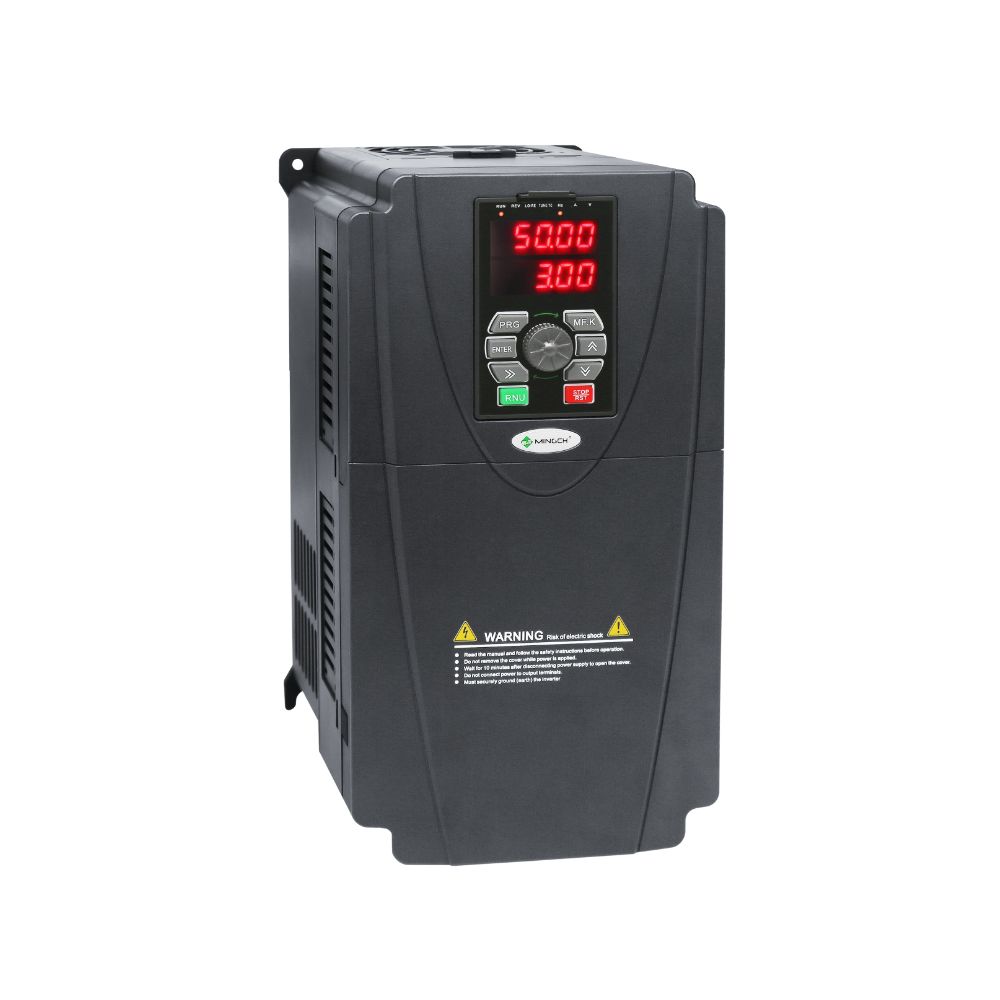




Industrial safety is a non-negotiable requirement in any professional installation. Safe Torque Off — commonly abbreviated as STO — is the most widely adopted safety function in modern VFDs. It instantly disables motor torque output when a safety condition is detected. This guide explains how STO works, the standards it meets, and why it is essential for engineering compliance.
What Is Safe Torque Off (STO)?
STO is a defined safety function specified under international standard IEC 61800-5-2. When activated, it disables the gate-drive signals to the VFD’s IGBT inverter stage. Without gate signals, the IGBTs stop switching. The motor receives no voltage and cannot produce torque.
Crucially, the main power supply to the drive remains connected. Only the motor output is disabled — not the entire control system. STO responds electronically in under 10 milliseconds. There are no mechanical contacts involved. This eliminates the risk of welded contacts and removes the need to cycle the main power for every maintenance stop.
Once the safety condition is cleared, the drive re-enables without a manual reset in standard STO configurations.
| 📌Note: STO is classified as a Category 0 stop under IEC 60204-1. For a controlled stop, always ramp the motor to zero speed before activating STO. |
Real-World Example: High-Rise Elevator in the Philippines
Consider a high-rise hotel elevator installation in the Philippines—a common setup in commercial buildings across cities like Metro Manila and Cebu City. During routine maintenance, a technician needs to inspect the motor coupling inside the machine room. Simply pressing the stop button isn’t enough—there’s still a risk the motor could restart due to a system or control signal.
With the MC9001’s STO (Safe Torque Off) function active:
- Opening the maintenance guard immediately cuts power to the STO inputs
- The drive shuts down the motor output right away
- Even if a run command is sent, the motor cannot start
- The technician can complete the work safely
Once the guard is closed, the system resets automatically, and the elevator returns to normal operation.
This type of safety setup aligns with international elevator safety standards, such as the STO compliance with IEC 61800-5-2 is increasingly required in international project contracts. This is especially true for European-funded infrastructure projects in Southeast Asia and Africa.
Ready to specify STO for your next project?
The MINGCH MC9001 is fully SIL 2 / PLd certified and ready for demanding industrial applications — elevators, conveyors, hazardous environments, and more. Our engineering team can provide wiring diagrams, functional safety documentation, and compliance support at no cost.EN 81 elevator safety standard and IEC 61508, which are commonly referenced in modern building projects in the Philippines. It also supports higher Safety Integrity Level (SIL) requirements, often needed in commercial and government developments.

STO in Explosion-Proof and Hazardous Environments
In oil, gas, and chemical facilities, opening a high-current contactor under load can produce sparks. Sparks in a hazardous area can cause explosions. STO removes motor energy electronically — with no spark risk. This makes it suitable for ATEX and IECEx-rated installations.
The VFD is installed outside the hazardous zone in a standard control panel. The motor operates inside the Zone 1 or Zone 2 area with suitably rated output cables.

STO vs. VFD Bypass: An Important Distinction
Many control panels include a bypass contactor that routes mains power directly to the motor. This is used when the VFD needs servicing or has failed. A bypass circuit does NOT provide STO protection. A motor running in bypass mode can start at full speed without warning.
For safety-certified applications, STO must be implemented through the drive path. The bypass circuit must also be interlocked to prevent it from overriding the STO function.
STO Wiring on the MINGCH MC9001
The MC9001 implements dual-channel STO — terminals STO1 and STO2 — meeting SIL 2 / PLd requirements. Each channel uses a separate optical isolation circuit. A single wiring fault on one channel cannot defeat the safety function.
Wiring is straightforward:
- Connect the safety relay or light curtain OSSD outputs to STO1, STO2, and 24V common.
- The drive provides a diagnostic output (STO-Status) that the safety PLC monitors continuously.
- Full wiring diagrams and functional safety documentation are available from MINGCH on request.
This documentation is particularly valuable for engineering companies managing compliance audits.
Business Case for Specifying STO

Beyond personnel safety, STO reduces production downtime. Maintenance procedures are faster because full power isolation is not required. Facilities report 15 to 30% faster maintenance cycles when STO is properly integrated.
STO compliance with IEC 61800-5-2 is increasingly required in international project contracts. This is especially true for European-funded infrastructure projects in Southeast Asia and Africa.
Ready to specify STO for your next project?

The MINGCH MC9001 is fully SIL 2 / PLd certified and ready for demanding industrial applications — elevators, conveyors, hazardous environments, and more. Our engineering team can provide wiring diagrams, functional safety documentation, and compliance support at no cost.
Don’t leave safety to chance. Work with a drive manufacturer that takes compliance seriously.
→ Visit us at www.mingchele.com.
Frequently Asked Questions
Does STO actually cut all power to the motor?
No. STO disables the gate signals to the inverter so the motor cannot produce torque. The main power supply to the drive remains connected. Only the motor output is stopped.
Is STO the same as pressing the emergency stop button?
Not exactly. An emergency stop may cut all power. STO disables motor torque electronically in under 10 milliseconds — without mechanical contacts or power cycling. It is faster and more reliable for safety-certified installations.
What standards does STO comply with?
STO is defined under IEC 61800-5-2 and classified as a Category 0 stop under IEC 60204-1. The MINGCH MC9001 dual-channel STO meets SIL 2 and PLd requirements.
Can I use a bypass contactor instead of STO?
No. A bypass contactor routes mains power directly to the motor and provides no STO protection. In safety-certified applications, the bypass must be interlocked so it cannot override the STO function.
What happens after STO is activated — does it restart automatically?
In standard STO configurations, the drive re-enables automatically once the safety condition is cleared — for example, when a maintenance guard is closed. No manual reset is required.
Is STO required for hazardous areas like oil and gas plants?
Yes. In ATEX and IECEx-rated installations, STO is preferred because it disables motor energy with no spark risk. Opening a contactor under load can cause sparks, which is dangerous in explosive environments.
How is STO wired on the MINGCH MC9001?
Connect the safety relay or light curtain OSSD outputs to terminals STO1, STO2, and 24V common. The drive’s STO-Status output lets a safety PLC monitor the function continuously. Full wiring diagrams are available from MINGCH.
Does STO help reduce maintenance time?
Yes. Because STO does not require cycling the main power, maintenance procedures are simpler and faster. Facilities with properly integrated STO report 15 to 30% faster maintenance cycles.
Discover MINGCH Manufacturing Excellence
Step inside our factory to see how high-quality voltage regulators and inverters are engineered for precision and durability.
Explore Our Factory