




At first glance, VFD-compatible and rated motors look similar and used interchangeably at times.
That’s because they can run with a VFD and support speed control in your system or use the same basic design, especially when you’re working with standard induction motors.
However, the real difference shows up in how they handle stress over time.
- A VFD-compatible motor can operate with a drive under certain conditions
- A VFD-rated motor is built to handle continuous use, voltage spikes, and heat without early failure.
Understanding this difference helps you choose the right motor, avoid costly downtime, and ensure stable performance in your application.
What Motors Are Compatible With VFD?
Not all motors respond the same way when connected to a frequency converter.
In general, most AC induction motors can run with a VFD. However, compatibility depends on design, insulation, and cooling.
You can use these motors with a VFD:
| Standard induction motors | For light-duty applications |
| Inverter-duty motors | Designed for variable speed |
| Special-purpose motors | With reinforced insulation |
A VFD induction motor is built to handle changing frequency and voltage. This makes it more stable under varying loads.
However, standard motors may still work in simple systems. The key is understanding the limits before you decide.
What is a VFD-Rated Motor?
A VFD motor is designed specifically to operate with a variable frequency drive. It can handle rapid voltage changes, high switching frequency, and heat buildup.
Here is what makes it different:
- Stronger insulation to handle voltage spikes
- Better cooling design for low-speed operation
- Ability to run continuously under variable speed
This type of motor is more reliable in demanding applications. That is why a VFD motor is often used in industrial systems where load changes frequently.
Why Standard Motors Struggle With VFD Systems
At first glance, a standard motor may seem good enough. However, problems appear over time.
When you connect a regular motor to a VFD, you may face insulation breakdown due to voltage spikes, excess heat at low speeds, and bearing damage from electrical currents.
These issues do not show immediately. But in hot environments like Southeast Asia, failure can happen faster. That is why proper selection is important.
Key Differences Between VFD-Compatible and Rated Motors
To make the choice clearer, here is a direct comparison.
| Feature | Standard motor | VFD-rated |
| Insulation strength | Basic | Reinforced |
| Heat dissipation | Limited | Improved design |
| Speed control | Fixed or limited | Wide range |
| Voltage spike resistance | Low | High |
| Lifespan with VFD | Shorter | Longer |
This comparison shows why design matters. A motor built for VFD use performs better and lasts longer.
Insulation Class and Why It Matters
Insulation is one of the most important factors in motor selection. When a motor runs with a VFD, it faces higher electrical stress. Higher insulation classes can withstand this stress better.
Common insulation classes include:
- Class B for standard conditions
- Class F for higher temperature tolerance
- Class H for extreme environments

In hot climates, you should aim for a higher insulation class. This reduces the risk of early failure.
Heat Dissipation in High-Temperature Environments
Heat is a major concern when using VFD systems. At lower speeds, the motor cooling fan slows down. This reduces airflow and increases temperature.
In tropical regions, this becomes more serious. To manage heat effectively, look for motors with external cooling fans, improved ventilation design, and higher thermal capacity.
Without proper cooling, even a good motor can fail early. This is often overlooked in many installations.
Selecting the Right Motor Based on Load Type
Motor selection should always match the load. Different loads place different demands on the motor. Here is a simple guide:
Constant torque loads
Examples include conveyors and compressors. You should choose motors with strong cooling and stable torque output.
Variable torque loads
Examples include pumps and fans. You can use standard motors in light-duty cases and VFD-rated options for continuous operation.
Heavy-duty loads
Examples include crushers and mixers. You need a high insulation class and durable construction. This step ensures your system runs efficiently.
Using VFD for 3-Phase Motor and Single-Phase Systems
Most industrial systems use a VFD for 3-phase motor applications. These setups provide better performance and efficiency. However, single-phase VFD options are also available.
You can use them for small machines, light industrial use, and limited power applications.
The key difference is capacity. Three-phase systems handle higher loads and offer better stability.
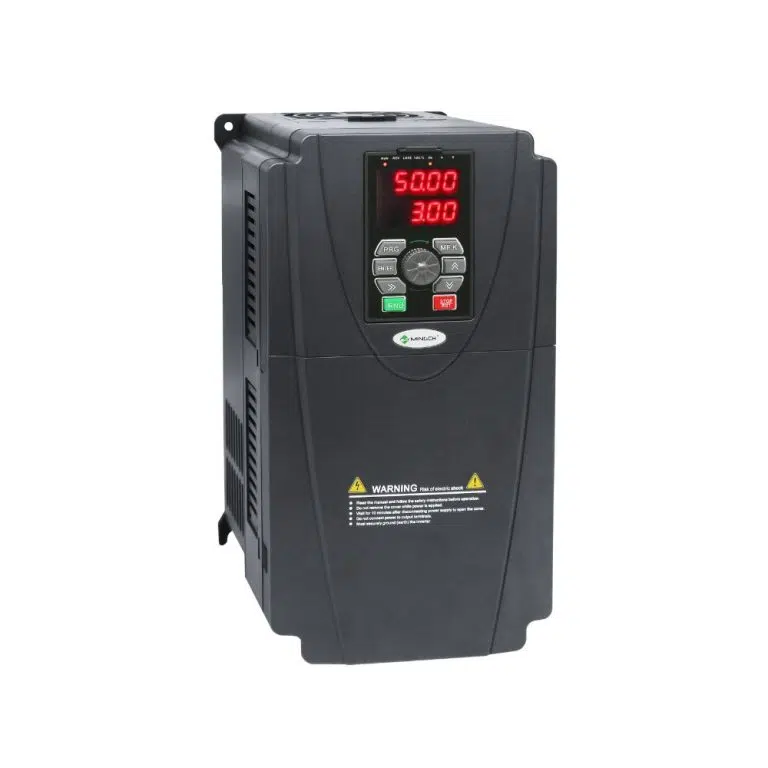
Matching Motor with the MINGCH MC9001 Frequency Converter
When using a universal drive like the MINGCH MC9001, proper matching becomes even more important. This type of drive supports a wide range of applications.
To get the best performance, you should match motor power rating with the drive, ensure voltage compatibility, and check insulation suitability.
The MC9001 can control speed smoothly. However, motor quality still determines long-term functionality. This is where choosing the right motor becomes critical.
For more technical information, contact us today to get started.
Common Mistakes in Motor Selection
Many users focus only on cost or availability. This often leads to problems later. Avoid these mistakes:
- Using standard motors for heavy-duty VFD applications
- Ignoring insulation class requirements
- Overlooking cooling design
- Mismatching motor and drive capacity
These errors increase maintenance costs. They also lead to unexpected downtime.
You should also consider cable length between motor and VFD, installation environment temperature, and duty cycle and operating hours.
Long cables can increase voltage spikes. Meanwhile, high ambient temperature reduces motor efficiency. These details help you make a better decision.
VFDs and Motors: Conclusion
Understanding the difference between standard motors and a VFD-rated motor helps you avoid common failures.
From insulation to cooling and load matching, each factor plays a role in long-term performance.
When you choose carefully, your system runs more efficiently and lasts longer.
This is especially important in demanding environments where heat and load changes are constant.
It’s also crucial to partner with a trustworthy VFD manufacturer to solidify your electrical brand. Contact us today to get started.


