




Choose a rackmount voltage regulator for data centers requiring high-density power protection and integrated rack solutions. Opt for tower regulators for smaller server deployments, office environments, or standalone applications where space efficiency isn’t the primary concern.
Rackmount vs. Tower Regulators: Similarities and Differences
Both rackmount voltage regulator and tower configurations provide essential voltage stabilization for server infrastructure, but key differences in deployment and integration could affect your buying decision. Here’s a direct comparison between the two options.
| Feature | Rackmount Regulator | Tower Regulator |
| Space Efficiency | Excellent – High density | Moderate (requires floor space) |
| Initial Cost | Higher | Lower |
| Rack Integration | Seamless | External placement required |
| Installation | Complex (requires mounting) | Simple |
| Noise Level | Moderate to High | Low |
| Management | Centralized with rack systems | Individual unit management |
Similarities
Both rack mount voltage regulator and tower systems share several important characteristics that make them suitable for server power protection applications.
Voltage Regulation Technology
Both configurations use identical voltage regulation circuitry, providing stable output voltage regardless of input fluctuations. Whether rackmount or tower, the core regulation technology delivers consistent performance for connected servers and network equipment.
Protection Features
Standard protection features remain consistent across both formats, including overvoltage protection, undervoltage protection, and overcurrent safeguards. Both options incorporate essential safety mechanisms for connected server equipment.
Bypass Switch Functionality
Both rackmount and tower regulators include bypass switch capabilities for maintenance and emergency situations. The bypass switch allows direct utility power flow to connected equipment while servicing the regulator.
Maintenance Applications: During scheduled maintenance, activate the bypass switch to provide direct utility power to connected servers while safely servicing the voltage regulator. This prevents costly downtime during routine maintenance procedures and ensures server rack power solutions UPS voltage regulator systems remain operational.
Emergency Situations: When regulators experience internal faults or require immediate shutdown, the bypass switch ensures continuous power delivery to critical systems, preventing data loss during unexpected equipment failures.
Correct Usage Timing: Use bypass switches only during planned maintenance windows or genuine emergencies. Extended bypass operation removes voltage regulation protection, leaving equipment vulnerable to utility power fluctuations and potentially damaging voltage spikes.

Build Quality
Professional-grade components and construction standards apply to both configurations, ensuring reliable operation in demanding server environments and data center applications.
Differences
While sharing core functionality, rackmount and tower regulators differ significantly in deployment characteristics and operational benefits in server environments.
| Category | Winner |
| Rack Integration | Rackmount |
| Cost-Effectiveness | Tower |
| Power Density | Rackmount |
| Installation Simplicity | Tower |
| Noise Levels | Tower |
| Professional Appearance | Rackmount |
| Centralized Management | Rackmount |
Rack Integration and Space Efficiency
Rackmount voltage regulator systems excel in server cabinet integration. Standard 19-inch rack mounting allows seamless integration with servers, switches, and other rack-mounted equipment, creating cohesive server rack power solutions ups voltage regulator installations ideal for data centers.
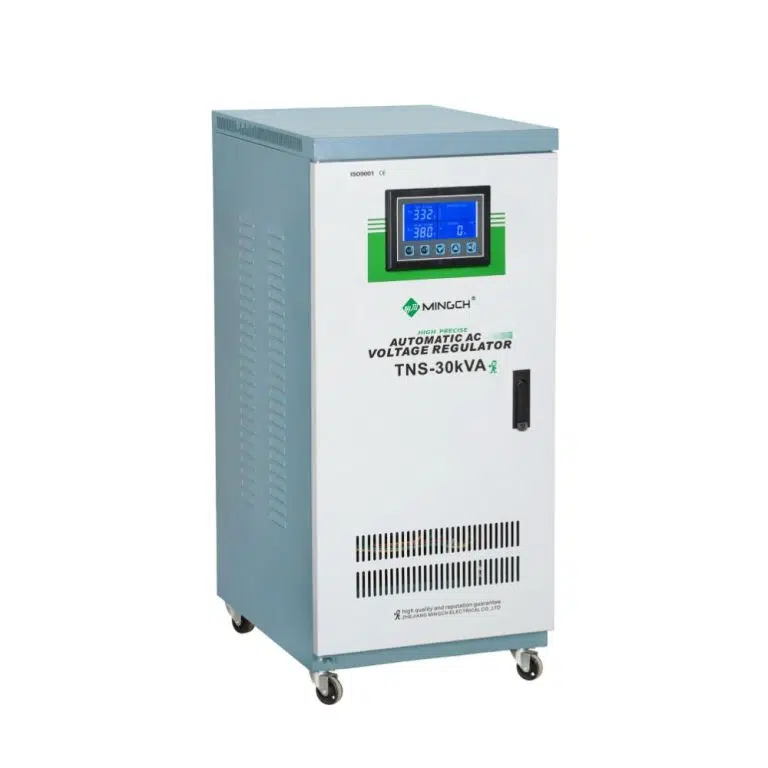
Tower regulators require dedicated floor or shelf space separate from rack infrastructure, limiting integration possibilities in space-constrained server environments.
Cost Analysis
Tower regulators typically offer lower initial investment, making them attractive for small businesses and budget-conscious server deployments. No additional rack space or mounting hardware required reduces upfront costs.
Rackmount voltage regulator systems demand higher upfront costs including rack space allocation and potential cooling system considerations for proper operation.
Power Density and Scalability
Rack mount voltage regulator configurations provide superior power density for server environments. Multiple units can be installed in single racks, creating high-capacity power protection systems without requiring additional floor space.
Tower expansion requires additional floor space and individual power connections for each new unit, limiting growth potential in server rooms and data centers.
Installation Complexity
Tower regulators offer straightforward installation. Connect power cables and position the unit appropriately. No specialized mounting or rack configuration is required for basic server protection.
Rackmount installation involves rack mounting, cable management, proper ventilation planning, and integration with existing server cabinet infrastructure.
Noise Considerations
Tower designs generally produce lower operational noise levels, making them suitable for office environments where server cabinets are located near workspaces and acoustic comfort matters.
Rackmount voltage regulator units often generate higher noise levels due to optimized cooling systems designed for dense server rack environments.
Centralized Management
Rack mounting enables efficient management of multiple rackmount voltage regulator units alongside servers and network equipment. Simplified monitoring, maintenance access, and cable management reduce operational complexity in server environments.
Tower units require individual attention and separate management approaches for each unit, complicating large-scale server deployments.
Performance Considerations
Both configurations deliver identical voltage regulation performance for server protection, but deployment environments influence overall effectiveness. Rackmount voltage regulator systems excel in high-density server applications requiring maximum uptime and professional data center appearance.
Tower regulators perform effectively in moderate-demand server environments where cost control and installation simplicity take priority over rack integration and density optimization.

Best Use Cases
Choose rackmount regulators when:
- Managing data center server environments
- Requiring high-density server installations
- Planning significant server expansion
- Needing integrated rack management
- Operating professional server rooms
- Implementing server rack power solutions UPS voltage regulator architectures
Choose tower regulators when:
- Working with limited server budgets
- Managing small server deployments
- Operating in office server environments
- Requiring quiet operation near workspaces
- Avoiding rack infrastructure investments
- Protecting standalone server equipment

Which Regulator Should You Choose?
Comparing rackmount voltage regulator and tower options reveals clear winners in specific server deployment categories. For data centers and large server installations prioritizing rack integration and power density, rackmount systems provide superior value despite higher initial costs.
For small businesses and office server environments where budget constraints and noise levels matter most, tower regulators offer practical advantages that justify their limitations in density and professional integration.
The decision ultimately depends on your specific server requirements: rack space constraints, budget limitations, growth plans, and operational environment all influence the optimal choice for your server cabinet power protection needs.


