




Choosing the correct 10 hp variable frequency drive (or another size such as 5 hp variable frequency drive or 20 hp variable frequency drive) is more than picking based on horsepower. It involves careful consideration of motor specs, load type, installation environment, and long-term reliability.
In this guide, we walk B2B buyers through a streamlined process of variable frequency drive selection and why Mingch VFDs offer top-tier solutions.
What “HP” Means in VFD Sizing
When someone asks for a “10 hp VFD,” that refers to the motor’s horsepower. But plasma cutting, pumps, and fans stress components differently. Matching horsepower alone can lead to overheating or wasted capacity.
- HP ≠ a full picture: VFDs are rated based on current (FLA) and voltage. Horsepower is only part of the story.
- Good rule: For typical variable-torque loads like fans and pumps, choose a VFD with the same HP and current rating as the motor.
- Heavy-duty loads (e.g., conveyors or compressors) may require oversizing to handle initial torque or frequent starts/stops.
That’s why “10 hp” is a starting point—not the final answer.
Choosing Between 5 HP, 10 HP & 20 HP VFDs
Here’s a quick breakdown of when different sizes make sense:
- 5 hp variable frequency drive – Best suited for lighter applications like small pumps, basic conveyors, and compact HVAC systems.
- 10 hp variable frequency drive – Sweet spot for mid-sized industrial tasks: packaging lines, larger fans, regional pumps.
- 20 hp variable frequency drive – Suited for hefty loads: big compressors, multiple motors, large conveyors, or applications needing high starting torque.
Mingch’s product page offers various sizes with detailed specs tailored to these use cases: check out their VFD category.
Key Factors in Variable Frequency Drive Selection
Once you know your motor’s horsepower, don’t stop there. Choosing the wrong voltage, amperage, or control settings can cause poor performance or even damage your equipment. Here’s what to check before selecting a 5, 10, or 20 hp VFD:
Motor Voltage and Phase
Ensure the VFD’s voltage and phase align with your motor’s specifications. Most industrial motors use 3-phase 230 V or 480 V. If the voltage or phase doesn’t align, it can harm either the VFD or the motor.
- Tip: A 10 hp, 460 V, 3-phase motor needs a VFD with matching input/output specs.
- Single-phase input? You may need to oversize the VFD or select a model built for single-phase supply.
Full Load Amps (FLA)
Horsepower is only part of the equation. Current (amps) is what the VFD actually delivers. Check your motor’s nameplate for its Full Load Amps (FLA), and choose a VFD that meets or slightly exceeds that rating.
- Example: If your 10 hp motor has an FLA of 14.8 A, choose a VFD that handles at least 15 A.
- Why it matters: Undersizing leads to nuisance trips or burnout; oversizing wastes money unless needed.
Load Type: Constant vs. Variable Torque
Not all applications stress your motor the same way. Match your VFD’s control mode and overload capacity to the job:
- Variable torque loads like fans and pumps use less torque as speed decreases. A standard V/F VFD works fine.
- Constant vs. Variable Torque loads such as conveyors and crushers require consistent torque across all operating speeds. These applications require VFDs with higher overload capacity—typically in the 120–150% range.
Choosing wrong here can cause motor stall or thermal trips.
Operating Environment
Will your VFD sit in a dusty warehouse? Near a heat source? Outdoors? Environmental conditions should influence your choice.
- Indoor, clean environments: IP20-rated drives are usually fine.
- Dirty or humid areas: Go with IP55/IP65 enclosures or add protective panels.
- Hot zones: Look for derating specs or VFDs with built-in cooling.
A reliable VFD like Mingch’s includes thermal protection and fault alarms to keep systems safe even in tough conditions.
Application Duty Cycle
Does your motor run continuously or cycle on and off all day? High-duty or cyclic loads stress drives differently.
- Continuous loads: Match HP and FLA closely.
- Intermittent heavy loads: Consider oversizing by one HP class to handle peaks without overheating.
Reviewing these factors before purchase helps avoid expensive replacement costs and keeps your motor running smoothly.

Choosing Between 5 HP, 10 HP & 20 HP VFDs
Not all motors need the same power, and selecting the right size VFD keeps operations efficient and safe. Here’s how to decide between a 5 hp, 10 hp, and 20 hp variable frequency drive:
5 HP VFDs are ideal for smaller equipment. Think of booster pumps, compact conveyors, or light-duty HVAC fans. These drives are cost-effective and often installed in compact industrial setups or utility rooms.
10 HP VFDs hit the sweet spot for medium-duty systems. These are widely used in packaging lines, larger fans, mixers, or irrigation systems. They offer a solid mix of performance and cost-efficiency, which makes them a go-to option for everyday industrial use.
20 HP VFDs are for heavier-duty machines. Large compressors, chillers, high-capacity conveyors, or even multiple small motors can be run using a single 20 hp drive if sized and configured correctly.
In each case, make sure the voltage, phase, and FLA align with the motor requirements. You can explore the full range of options from Mingch on their VFD product page.
Mingch’s 10 HP VFD Specs: What You Get
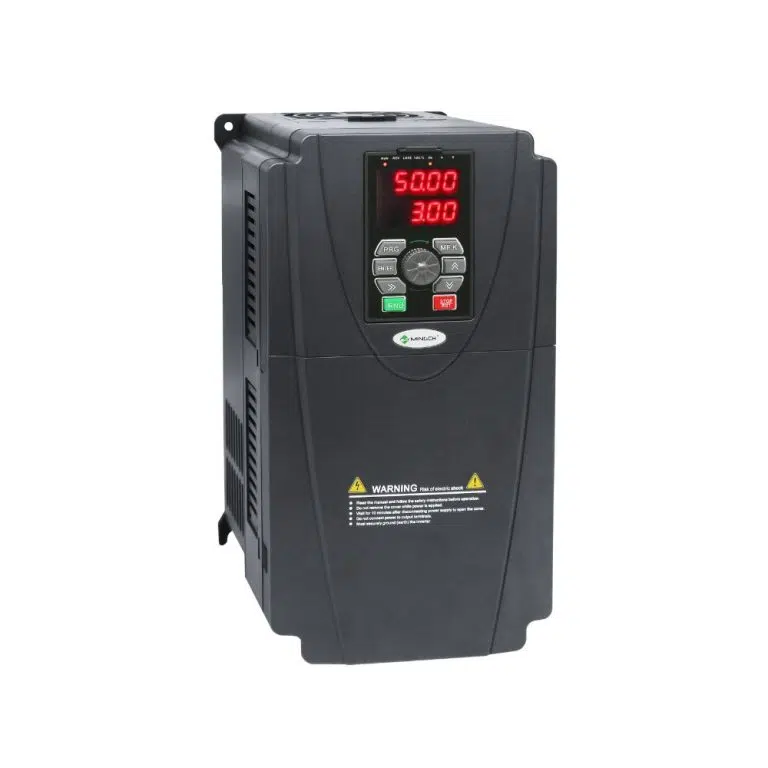
When selecting a 10 hp variable frequency drive, you want more than just power—you need confidence in its specs, protections, and compatibility. Mingch’s 10 hp (7.5 kW) VFD delivers on all fronts, offering industrial-grade performance with flexible options.
Contact us today for a quote or if you want to know the best HP VFD for you!


