




Hot-swappable technology in an uninterruptible power supply battery allows you to replace components without shutting down the UPS or connected equipment. It means your systems keep running during maintenance, ensuring zero downtime for critical operations.
What is Hot-Swappable Technology?
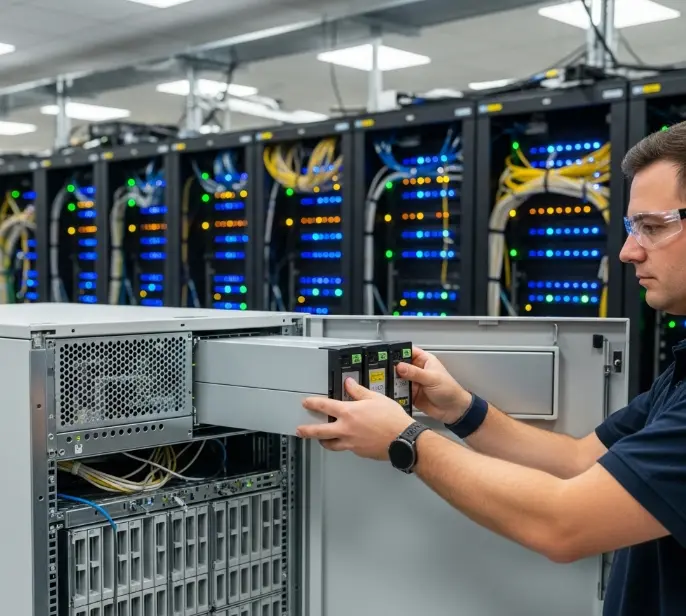
Hot-swappable technology refers to the ability to replace components such as the uninterruptible power supply battery, power modules, or control cards while the system is still operating. This means maintenance teams can perform replacements without affecting power delivery, keeping operations stable even during servicing.
In a UPS, this capability is particularly valuable in environments where power loss can disrupt processes, damage equipment, or cause data loss. It allows for faster service interventions and reduces the risks associated with scheduled shutdowns.
Key Components in a Hot-Swappable UPS

A hot-swappable UPS design involves three main serviceable elements:
- Hot-swappable batteries – The core of uninterruptible power supply replacement batteries is the ability to swap them in minutes without interrupting power delivery.
- Power modules – Modular design allows you to scale capacity or replace faulty units without taking the system offline.
- Control cards – These manage system logic and can be replaced quickly to restore full control functionality.
At MINGCH Electric, hot-swappable components are designed with serviceability in mind. The CEO’s technical background as a power electronics engineer ensures every system is engineered for quick access, easy handling, and maximum uptime.
Because MINGCH produces core components in-house, from smart PCB control systems to self-designed toroidal transformers, every part is perfectly matched for compatibility and long-term reliability.
This vertical integration also means strict quality control at every stage, ensuring that uninterruptible power supply replacement batteries and other modules meet exact specifications for durability and performance.
Benefits of Hot-Swappable UPS Design
Hot-swappable architecture brings several practical advantages to facilities running critical systems:
Zero Downtime for Maintenance

Hot-swappable components allow servicing while the UPS continues supplying power. This avoids operational interruptions that could lead to data loss, production delays, or service outages.
Faster and Simpler Repairs
Technicians can replace faulty modules without dismantling the entire system, reducing repair times and allowing maintenance crews to spend less time on-site.
Higher Reliability Over Time
Quick access to replace parts means potential failures are addressed before they escalate. Systems remain within performance standards for longer, extending their service life.
Because MINGCH manufactures core components internally, we maintain rigorous quality control that supports these benefits. Our CE- and ISO 9001-certified processes test every unit under simulated real-world conditions, cutting after-sales issues and making maintenance more predictable.
Applications for Hot-Swappable UPS Systems
Hot-swappable UPS designs are widely used in:
- Data centers where even seconds of downtime can cause major service disruptions.
- Critical factory equipment where continuous operation is needed for production targets.
- Healthcare facilities that require stable power for sensitive medical devices.
- Telecommunications infrastructure where uptime ensures uninterrupted communication services.
In each of these environments, the ability to change a battery or module on the fly can mean the difference between smooth operation and costly outages.
How to Choose a Hot-Swappable UPS
Before investing in a hot-swappable UPS, focus on the details that determine real-world serviceability and reliability, including:
Quick-Access Design
Look for systems where batteries, power modules, and control cards are placed for front or top access. This reduces the time and tools needed for maintenance.
Proven Component Reliability
Select uninterruptible power supply units from manufacturers who design and produce their own key parts. This ensures compatibility, consistent performance, and faster replacement availability.
Comprehensive Quality Testing
A good UPS should be tested under real-world load and environmental conditions before shipment. This verifies that hot-swappable features work reliably in actual use, not just in lab settings.
Why MINGCH’s Approach Delivers Long-Term Reliability
Many uninterruptible power supply units rely on third-party components, which can lead to mismatched specifications and higher failure rates. MINGCH avoids these risks by producing all critical components ourselves.
It means:
- No uncertainty over compatibility between parts.
- Consistent performance across the system’s service life.
- Faster turnaround for replacement components.
This self-production model supports both immediate reliability and long-term maintainability, allowing clients to plan service schedules with confidence.
Risks of Using Non-Hot-Swappable UPS Systems
Without hot-swappable capability, any battery or module replacement requires taking the UPS and the connected load offline. In a live operational setting, that can mean:
- Service interruptions affecting customers or production.
- Increased risk of equipment damage from sudden power loss.
- Higher labor costs due to more complex maintenance procedures.
By contrast, hot-swappable systems isolate the faulty component while the rest of the UPS continues protecting your equipment.

Conclusion
Hot-swappable technology has become a standard feature in modern uninterruptible power supply units for organizations that value continuous operation. MINGCH Electric’s focus on maintainability, backed by the CEO’s engineering expertise and in-house production of key components, ensures customers receive UPS solutions that are easy to maintain, reliable, and built for long-term performance.
By combining precise engineering with strict quality control, MINGCH delivers UPS systems that meet operational demands while giving you the confidence that maintenance will never compromise uptime.


