




In power systems, measuring the wrong thing—or measuring it the wrong way—leads to real risks. That’s why knowing the difference between a current transformer (CT) and a voltage transformer (VT) matters, especially if you’re working with switchboards, protection relays, or automation panels.
This isn’t just a spec sheet detail. Mixing them up could mean overloads, faulty readings, or system damage. From high-voltage current transformers in substations to low-voltage CTs in factory panels, choosing the right type is critical.
Let’s break down how each one works, where they’re used, and what you need to know to pick the right fit.
What Is a Current Transformer?

A current transformer, or CT, reduces high electrical current to a lower, manageable level—typically 5A or 1A—so it can be safely read by meters, relays, or control systems. It wraps around or connects in series with a conductor and outputs a proportional current.
CTs play a key role in tracking current levels, detecting overloads, and supporting automated control systems. They’re found in everything from industrial panels to utility substations and are available in various designs for both low-voltage and high-voltage systems.
They don’t measure voltage or power directly—they exist solely to track current flow and pass that data to your system safely.

What Is a Voltage Transformer?
A voltage transformer (also called a potential transformer, or VT/PT) steps down high voltage to a lower, measurable level—often from several kilovolts to 110V or 120V. It lets protection relays and meters measure voltage safely without being directly exposed to high voltages.
Unlike current transformers, VTs are designed for parallel connection across the line. They aren’t designed to carry load current—instead, they mirror the voltage at a reduced, readable level.
These transformers are widely used in power distribution, grid monitoring, and substation protection. They can be single-phase or three-phase depending on the system, and like CTs, are available in configurations for both low-voltage and high-voltage applications.
VTs play a key role in detecting undervoltage, overvoltage, and phase imbalance—making them essential for system reliability and safety.
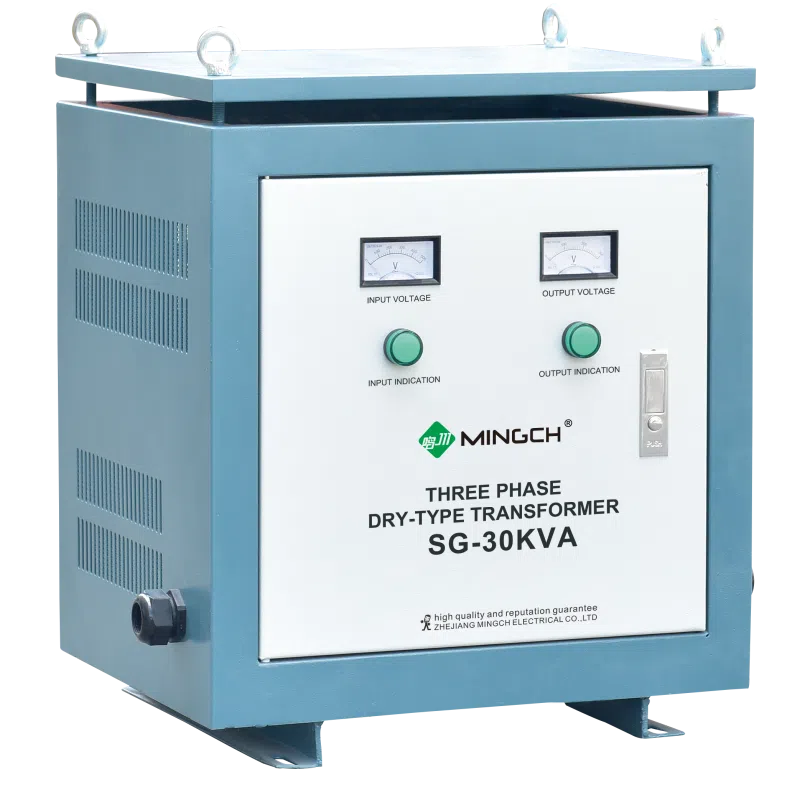
Current vs Voltage Transformer: Key Differences
Although both are used for monitoring and protection, current transformers (CTs) and voltage transformers (VTs) serve completely different roles. Mixing them up could lead to dangerous misreadings or equipment failure.
Here’s a quick comparison:
| Feature | Current Transformer (CT) | Voltage Transformer (VT/PT) |
| Main Function | Measures current | Measures voltage |
| Connection Type | Series with the conductor | Parallel across the circuit |
| Output Signal | Standard current (e.g., 5A or 1A) | Standard voltage (e.g., 110V, 120V) |
| Used In | Load monitoring, protection relays | Voltage monitoring, grid diagnostics |
| Accuracy Dependence | Depends on burden and load position | Depends on insulation and line balance |
| Voltage Handling | Available for low and high voltages | Typically used in medium to high-voltage |
| Safety Role | Isolates control systems from load current | Isolates monitoring systems from high-voltage |
In many systems—especially in substations—CTs and VTs are used together to give a complete picture of power usage, system health, and protection needs.
High Voltage and Low Voltage CTs: What’s the Difference?
The main difference between a high-voltage current transformer and a low-voltage current transformer is the system voltage they’re designed to monitor. But this also impacts their construction, insulation, and application.
- High-voltage current transformers are built for systems operating above 1,000 V. They’re often used in substations or power distribution networks and require heavy insulation, higher creepage distances, and weather-resistant enclosures.
- Low-voltage current transformers are used in systems under 1,000 V—like factory panels, motor control centers, or building switchboards. They’re typically smaller in size, simple to install, and designed to fit on DIN rails.
Accuracy and safety requirements grow with voltage. The higher the system voltage, the more important isolation and transformer leakage control becomes. Choosing the wrong type doesn’t just affect readings—it can pose serious safety risks.
How Much Electricity Does a High-Voltage Transformer Produce?
A common misconception is that transformers “produce” electricity. They don’t. A transformer’s job is to transfer electrical energy from one circuit to another while changing the voltage or current.
The amount of electricity a high-voltage transformer can handle is defined by its rated capacity, usually expressed in VA (volt-amperes) or kVA (kilovolt-amperes). This tells you how much power it can safely pass through without overheating or failing.
For example, a high-voltage CT may have a 5 kVA rating, meaning it can handle up to 5,000 volt-amperes of load on the secondary side. But it doesn’t generate power—it just delivers a safe, scaled signal to your monitoring or protection devices.
Current vs Voltage Transformer: Conclusion
Don’t confuse current and voltage transformers—they serve different purposes and follow different
rules. One measures flow, the other measures force. Choosing the wrong type can compromise system
protection, safety, and accuracy. Always match the transformer to the signal you’re monitoring and the
voltage level it’s built to handle.
Check our product catalog or website to find options built for accurate, reliable measurements.
Current vs Voltage Transformer: FAQs
1. Can I use a current transformer as a voltage transformer?
No. They measure different signals and are built differently. Using one in place of the other is unsafe and will give incorrect readings.
2. What happens if I install a CT backwards?
You’ll reverse the polarity, which can cause protection relays to misread current flow or fail to trip during a fault.
3. Do high voltage transformers need regular calibration?
Yes. For accurate metering and protection, they should be tested and calibrated according to your system’s maintenance schedule—typically once every 1 to 3 years.


