




An industrial power inverter is built for continuous, high-load operation, not for vehicles or household backup use.
Unlike consumer units, industrial models are designed to run for years under load, handle overload events safely, and operate in harsh environments.
This difference makes manufacturer selection as important as the inverter itself.

What Makes an Inverter “Industrial Grade”
Design Lifespan and Continuous Operation
Industrial inverters are designed for continuous duty. They are expected to operate daily, often twenty-four hours a day, without performance degradation.
Household inverters assume intermittent use. Industrial designs assume sustained electrical and thermal stress over many years.
Structural Differences from Consumer Inverters
Industrial units use heavier power components, reinforced internal layouts, and conservative derating. Heat paths are planned from the start, not added later.
This design philosophy explains why industrial equipment survives conditions that quickly damage consumer products.
Core Structural Design Factors Buyers Should Evaluate
Power Module Architecture
Some industrial inverters use modular power stages, while others rely on integrated designs. Modular architecture allows faster repair and shorter downtime.
Integrated designs reduce size but usually require full unit replacement during failures.
Cooling and Thermal Management
Active cooling is common in industrial environments with high ambient temperatures. Passive cooling may work only in controlled indoor settings.
Stable thermal performance protects components and maintains output accuracy over long operating cycles.
| Structural Feature | Operational Impact |
| Modular power design | Faster maintenance, lower downtime |
| Industrial heat sinks | Stable output under high load |
| Active cooling | Better high-temperature tolerance |
Overload Capacity and Real-World Load Behavior
Motor and Inductive Load Handling
Industrial loads rarely behave like resistive test loads. Motors, pumps, and compressors draw high current during startup.
An industrial inverter must manage surge current without shutdown or damage. Rated power alone does not describe this behavior.
Short-Term vs Long-Term Overload Tolerance
Short overloads last seconds, such as motor starts. Long overloads may last minutes during process fluctuations.
Industrial systems define both limits clearly. This distinction matters in pumping stations and production lines.
Operating Environment Adaptability
Temperature, Dust, and Humidity Resistance
Industrial sites are rarely clean or climate-controlled. High heat, dust, and moisture are common.
Inverters must maintain insulation integrity and cooling efficiency under these conditions.
Grid Instability and Power Quality Conditions
In many regions, grid voltage fluctuates frequently. Weak grids cause repeated stress on power electronics.
Industrial and agricultural installations in regions like Venezuela highlight the need for voltage tolerance and stable output.
| Environment Condition | Design Response |
| High ambient temperature | Enhanced cooling system |
| Dust-heavy locations | Filtered airflow or sealed enclosures |
| Weak grid | Wide input voltage tolerance |
Built-In Protection Functions That Matter in Industrial Use
Electrical Protections
Short circuit protection prevents cascading failures during load faults. High and low voltage cutoff protects downstream equipment.
These functions reduce both repair cost and unplanned downtime.
Thermal and System Protections
Temperature sensing allows controlled shutdown before damage occurs. Automatic recovery logic prevents repeated fault cycling.
Protection design affects system reliability, not just safety compliance.
Typical Industrial Applications and Value Scenarios
Production Lines and Automated Equipment
Production lines depend on stable power. Voltage drops or waveform distortion can trigger control errors.
Industrial inverters protect process continuity and reduce scrap rates.
Pumping Stations and Infrastructure Systems
Pumps often operate continuously and start under load. Inverters must tolerate both conditions.
Remote pumping sites depend on reliability because maintenance access is limited.
Communication and Equipment Rooms
Communication rooms require clean, stable power. Inverters support backup logic without introducing electrical noise.
Consistency matters more than peak performance in these environments.
Certification and Compliance Requirements for Industrial Projects
Common International Certifications
CE certification confirms conformity for many export markets. ISO manufacturing systems ensure consistent production quality.
These certifications support long-term project approvals.
Why Certification Affects Procurement Approval
Certified equipment simplifies bidding, customs clearance, and site acceptance. Lack of certification often delays projects or increases inspection costs.
Choosing the Right Manufacturer, Not Just the Product
Engineering Support and Configuration Capability
Industrial buyers need pre-sales load analysis. Manufacturers should assist with configuration, not just offer catalog models.
Engineering support reduces sizing errors and field failures.
Production Stability and Delivery Reliability
Long-term projects require a consistent supply. Spare parts availability matters years after installation.
Power inverter manufacturers reduce operational risk.
Product Line Completeness
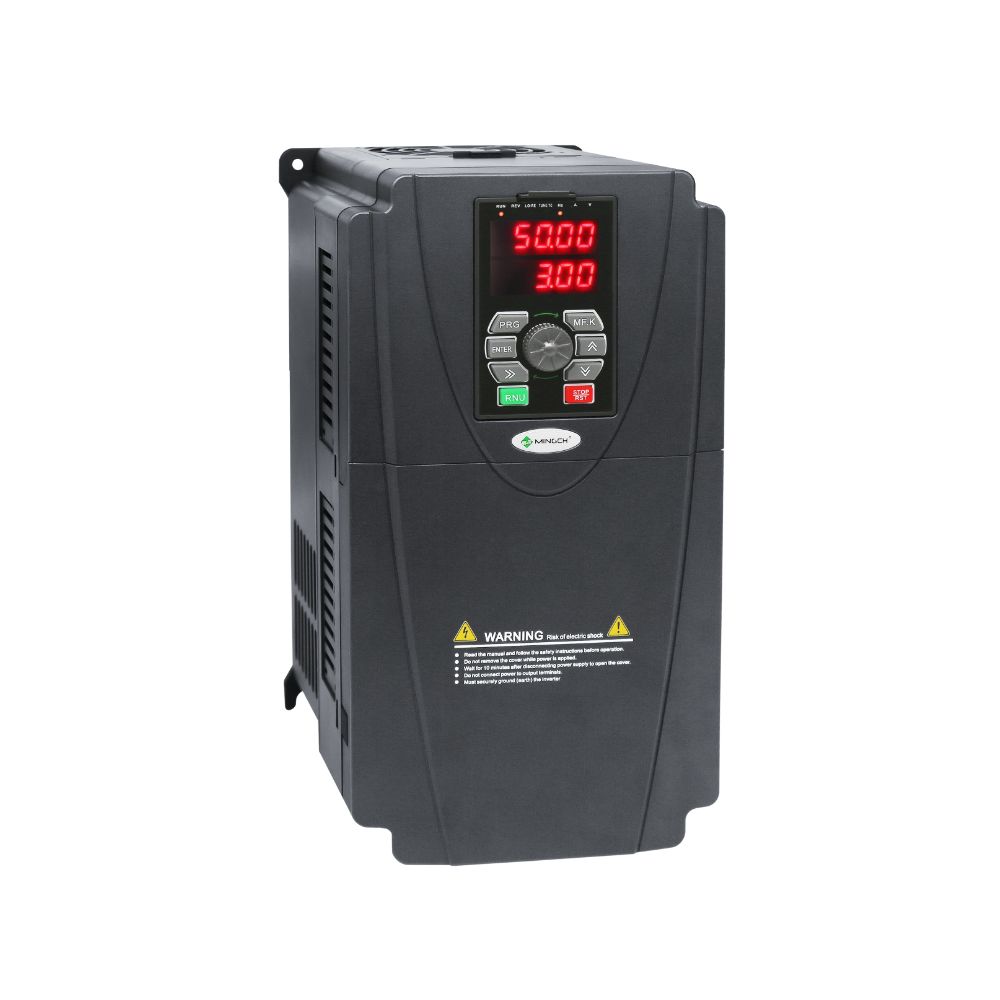
A complete industrial inverter range supports system scaling and future upgrades. Manufacturers like MINGCH offer industrial power inverter solutions through the MC9001 and MCS9001 series, covering multiple voltage and power configurations for industrial use.
Selection Checklist for Industrial Buyers
Electrical Parameters to Prepare
Buyers should define the DC input voltage and the required AC output power clearly. These values determine internal architecture.
Load and Operating Conditions
Load type affects overload design. Daily operating time affects thermal planning. Incomplete data slows engineering evaluation.
Installation Environment
Ambient temperature and installation location influence enclosure and cooling design. Clear environmental data improves quotation accuracy.
| Inquiry Item | Why It Matters |
| DC input voltage | Determines internal topology |
| AC output power | Defines inverter capacity |
| Load type | Affects overload handling |
| Operating hours | Influences thermal design |
| Environment | Guides enclosure selection |
Maintenance, Serviceability, and Long-Term Operating Cost
Industrial buyers should evaluate how an inverter is maintained after installation, not just how it performs on day one. Easy access to internal components reduces service time during inspections or repairs.
Clear fault codes and diagnostic indicators help technicians identify issues quickly without specialized tools.
Serviceability directly affects long-term operating cost. Inverters that require full unit replacement for minor failures increase downtime and spare inventory expense. Models designed for field service lower lifecycle costs, especially in remote or continuously operating sites.
From a procurement view, asking about recommended maintenance intervals, spare part availability, and local technical support helps avoid hidden costs after commissioning.
Conclusion
Discover MINGCH Manufacturing Excellence
Step inside our factory to see how high-quality voltage regulators and inverters are engineered for precision and durability.
Explore Our FactorySelecting an industrial inverter is a system decision, not a single product choice. Performance depends on load behavior, environment, and manufacturer capability.
Clear technical input allows faster engineering support and better long-term results. Buyers who define requirements early reduce risk, cost, and downtime.
To jumpstart your partnership with MINGCH, contact us today.


