




A three-phase inverter is an electrical device that converts direct current (DC) into three-phase alternating current (AC) — the same type of power used in factories, solar systems, and large-scale electrical equipment. In simple terms, it allows DC sources like batteries or solar panels to power machines that require AC electricity. This technology is essential in industrial automation, renewable energy systems, and commercial solar installations, where efficiency and balance are critical.
Understanding how an inverter’s three-phase system works helps both professionals and beginners appreciate its role in powering modern industries. This guide explains its working principle, structure, and benefits, plus practical tips for installation and maintenance.
What Is a Three Phase Inverter?
A three-phase inverter is a converter that transforms DC into a three-phase AC output with equal amplitude and a 120-degree phase difference between each line. Unlike a single-phase inverter, which delivers power through one alternating current, the three-phase type produces smoother, more stable power — ideal for heavy machinery, electric motors, and solar grid systems.
Most modern three-phase inverters, such as Mingchuan’s MC9001 general-purpose model, are designed for high efficiency, stable voltage output, and precise control. These inverters can handle higher loads while maintaining power balance and minimizing electrical losses.
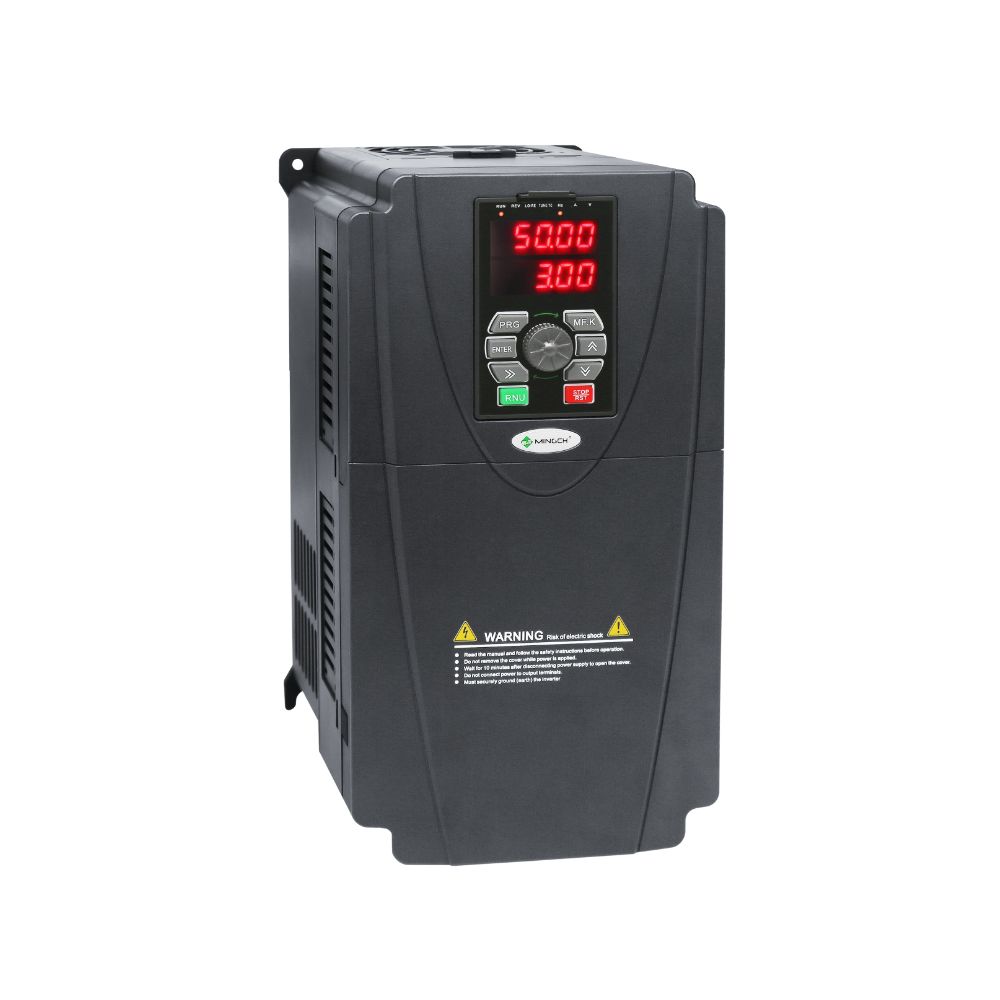
MC9001-4T0220 Frequency Converter (VFD)
- High-Efficiency DC-to-AC Conversion
- Precise Motor Speed & Voltage Control
The Working Principle of a Three-Phase Inverter

The three-phase inverter working principle is based on pulse width modulation (PWM) — a method of controlling the output voltage by rapidly switching semiconductor devices on and off.
A typical circuit includes six power transistors (VT1–VT6) and six diodes. These switches are controlled in a precise sequence to create alternating current at the output terminals. Each pair of switches operates 180 degrees apart, producing the three sine-wave outputs known as phases A, B, and C.
By adjusting the switching frequency, the inverter can shape the output waveform to closely match a pure sine wave. This modulation ensures stable power delivery, reduces electrical noise, and improves the efficiency of connected equipment.
Types of Three-Phase Inverters
Three-phase inverters are commonly categorized into voltage-source and current-source types — depending on how they handle input energy.
1. Voltage-Type Three-Phase Inverter In a voltage-type inverter, the input is supplied by a stable DC voltage source. The inverter’s output voltage mirrors the amplitude of this source, while the output current depends on the load. These systems are widely used in industrial drives and motor control, where consistent voltage is necessary. The advantage of this design lies in its ability to produce precise AC voltage for variable-speed applications.
2. Current-Type Three-Phase Inverter In contrast, a current-type inverter operates with a constant DC current source. It uses inductors and capacitors to maintain a steady current flow and protect against surges. The output current remains stable even when the load changes, making it ideal for grid-connected solar and renewable systems.
This type is also preferred in commercial solar installations, where energy flow must remain consistent despite variations in sunlight or load conditions.
Single Phase vs. Three Phase Inverter
A single-phase inverter delivers power suitable for small homes and light electrical loads. However, a three-phase power inverter offers higher capacity, better load balancing, and smoother operation, making it the preferred choice for factories, office buildings, and large-scale solar systems.
If you’re upgrading from a single-phase to three three-phase inverter, you’ll experience improved energy efficiency, reduced line losses, and enhanced motor performance. This transition is especially beneficial in areas with high energy demand or for powering multiple devices simultaneously.
Installation and Safety Considerations
Proper installation ensures long-term reliability and efficiency. A common question is whether single and three-phase inverters can be installed indoors. Yes, they can, as long as the area is well-ventilated and free from excessive dust and moisture.
Another frequent concern is: Is horizontal mounting for three-phase inverters allowed? Generally, it’s not recommended. Most manufacturers, including Mingch Electrical, advise vertical installation for better cooling and protection against overheating. Always follow the mounting orientation specified in the product manual.
For wiring, a three-phase inverter wiring setup includes connections for three output lines (L1, L2, L3) and a neutral or ground line. Correct wiring prevents voltage imbalance and ensures safety compliance.
Applications and Benefits
The inverter three-phase plays a vital role across industries. Here are a few examples:
- Solar Energy Systems: Converts DC from solar panels into AC power compatible with the grid.
- Industrial Automation: Powers motors, pumps, and conveyors efficiently.
- Commercial Buildings: Maintains a stable power supply across multiple floors or sections.
- Renewable Energy: Works in tandem with three three-phase inverters in commercial solar installations to ensure consistent power quality.
Key Benefits:
- High efficiency and reliability.
- Reduced power losses and harmonic distortion.
- Smooth operation for large motors and sensitive devices.
- Seamless integration with modern energy systems.
Mingchuan’s three-phase integrated voltage stabilizers also complement these systems by ensuring consistent voltage, especially in environments with fluctuating grid power. This combination enhances performance, reduces downtime, and extends equipment lifespan.
Common Questions About Three-Phase Inverters
What is the main purpose of a three-phase inverter? It converts DC to balanced three-phase AC, ensuring smooth power flow for industrial and renewable applications.
Can I use a single-phase inverter on a three-phase house? Not directly. You’d need additional converters or wiring adjustments to distribute power correctly.
What’s the difference between a single-phase and a three-phase power inverter? A single-phase inverter handles smaller loads, while a three-phase model supports high-demand equipment and offers better efficiency.
Are three-phase inverters suitable for solar use? Yes. They’re commonly used in commercial solar installations and large-scale renewable systems due to their stability and efficiency.
Conclusion: Smarter Power with Mingch Electrical
A three-phase inverter is a cornerstone of modern power systems, enabling efficient DC-to-AC conversion for industries, solar plants, and commercial facilities. Its precision, reliability, and adaptability make it an indispensable technology for the future of energy. At MINGCH Electrical, we design and manufacture advanced power solutions, including the MC9001 inverter three-phase model and three-phase integrated voltage stabilizers. Our goal is to make industrial energy systems more efficient, stable, and sustainable.
Explore our collection of inverter three-phase systems and discover how we can help power your success.
Discover MINGCH’s Manufacturing Excellence
Explore our state-of-the-art facilities, advanced production processes, and commitment to quality that powers our reliable electrical solutions.
Learn About Our Factory


