




Industrial power supplies matter because modern automation and telecom systems cannot tolerate unstable electricity. Even small voltage fluctuations can interrupt production, disrupt communication networks, or damage control electronics. In environments where uptime is expected, power stability becomes a business requirement.

Why power stability now defines system reliability
When incoming power becomes unstable, the failure is rarely obvious at first. Motors hesitate, controllers reset, and signals first drop for seconds, then minutes. In factories, hospitals, hotels, and telecom facilities, these issues compound quickly.
This explains why investment in industrial power infrastructure continues to accelerate. Industry data places the global industrial UPS at $19.48 billion by 2032. That growth reflects a shift toward power systems designed for real operating conditions.
What industrial power supplies actually do
Industrial power supplies convert, regulate, isolate, and protect power so downstream systems behave predictably. Especially under load. Especially when the grid is unstable.
In real installations, this means handling several responsibilities at once:
- converting incoming AC into stable DC for control electronics
- regulating voltage to absorb spikes and dips
- isolating sensitive components from electrical noise
- distributing power evenly across multiple loads
- maintaining continuity during brief disturbances
This is the key difference between industrial and consumer-grade solutions. Consumer devices assume clean input. Industrial systems assume the opposite.
Why protection logic matters more than raw capacity
Many systems fail not because they lack power, but because they lack protection.
A single power event often triggers a sequence:
- Voltage dips increase motor current
- Control electronics register faults
- Protective relays trip
- Systems shut down unexpectedly
Industrial power supplies, combined with intelligent motor control, interrupt this chain. Overcurrent, overvoltage, undervoltage, overload, and thermal protection keep systems operating when conditions degrade. This is especially critical in automation control environments where electrical and mechanical behavior are tightly linked.
Real-world proof: elevator failures in a Manila luxury hotel
A luxury hotel in Manila struggled with daily elevator breakdowns. Guests were trapped between floors, and it turns out the power was the cause behind the breakdown.
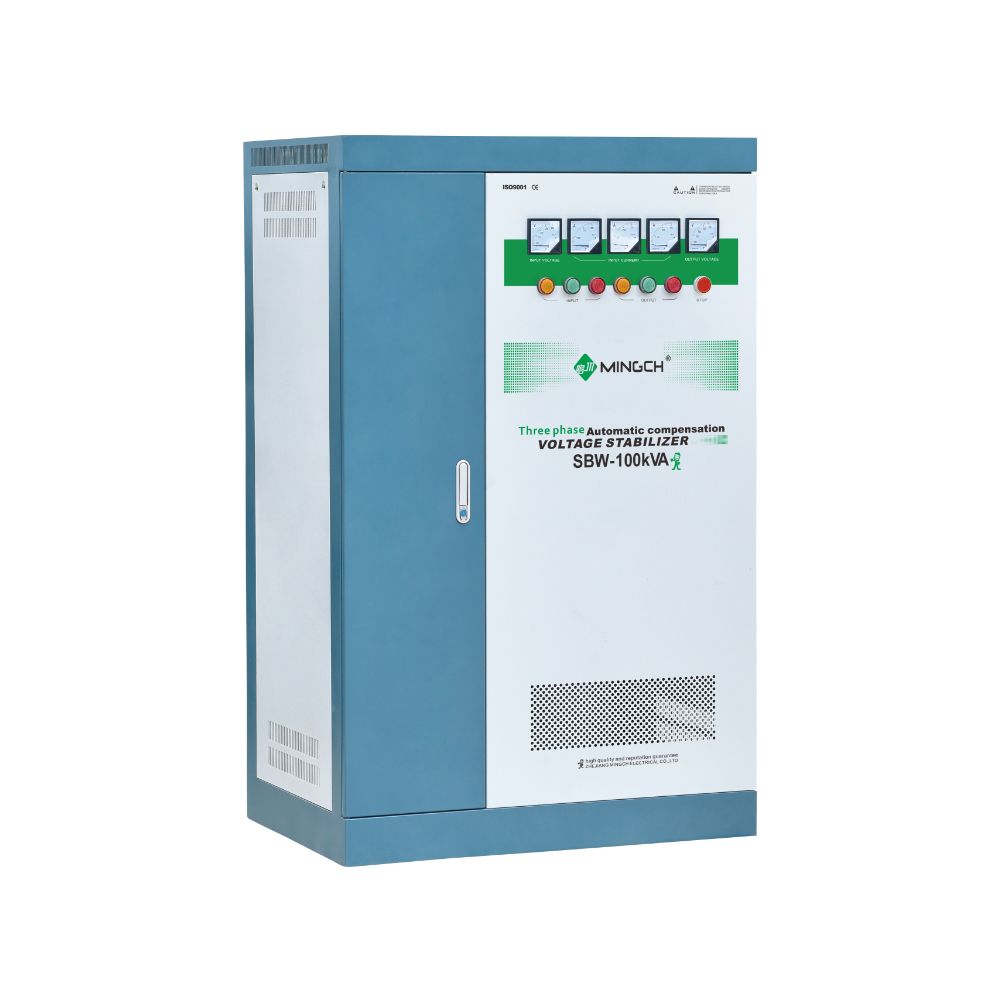
Grid voltage fluctuated heavily throughout the day, stressing elevator control systems beyond their tolerance. After installing industrial-grade voltage regulation equipment from Mingch Electrical, the impact was immediate:
- Elevator uptime reached 99.9 percent
- Maintenance costs dropped by around 50 percent
- Guest complaints related to the elevators stopped
You can read the full case study here: How a Manila luxury hotel solved elevator voltage problems
This project illustrates a common reality. Many “mechanical” problems originate from electrical instability.
How motor control supports stable power systems
Industrial power supplies rarely operate alone. In automation environments, they work alongside motor control equipment that absorbs electrical stress and protects mechanical loads.
One example is the MC9001-4T0220 frequency converter. It is designed for demanding industrial automation applications and supports wide input voltage ranges. Its integrated protection functions include overvoltage, undervoltage, overcurrent, overload, phase loss, short circuit, and braking protection.
Stable torque at low speeds matters, especially for elevators, pumps, fans, and packaging lines. When paired with PLCs, the MC9001 helps automation systems remain stable even when upstream power conditions fluctuate.
For applications that do not require speed control, the MCR8-115KW Soft Starter addresses a different risk. High inrush current during startup. Gradually increasing voltage, it reduces electrical shock and mechanical stress while still providing multiple layers of protection.
Together, regulated power supplies, frequency converters, and soft starters form a layered protection strategy.
Where industrial power appears in automation and telecom
In real-world systems, industrial power shows up in different forms.
Inside control cabinets, an industrial 24vdc power supply is commonly used to feed PLCs, sensors, relays, and communication modules. This voltage level balances safety, efficiency, and platform compatibility.
For standardized layouts and easier servicing, many engineers rely on an industrial DIN rail power supply. It simplifies cabinet design and makes future expansion less disruptive.
In communication infrastructure, particularly in regions with unstable grids, a 260v-400v power supply for telecom industry applications ensures network equipment remains operational across wide input voltage ranges.
At the system level, power supplies for industrial automation act as the foundation that prevents small electrical disturbances from escalating into system-wide failures.
Beyond factories: hospitals and agriculture
The same power principles apply outside manufacturing.
In CT scan rooms in leading hospitals in China, stable power is essential for patient safety and diagnostic accuracy. Voltage instability can interrupt scans, trigger recalibration, or damage sensitive imaging electronics.
In livestock automation projects in Venezuela, industrial power systems protect pumps, feeding equipment, and ventilation systems from unreliable grids. Here, power reliability directly affects productivity and animal welfare.
Why industrial power pays off over time
Reliable industrial power supplies deliver long-term benefits that go beyond uptime:
- reduced wear on motors and electronics
- fewer nuisance trips and false alarms
- lower maintenance and replacement costs
- higher confidence for operations teams
As automation and telecom systems grow more complex, the value of stable, protected power increases.
Final takeaway
Industrial power supplies are not background components. When power quality is treated as a strategic investment rather than an afterthought, organizations see measurable gains in reliability, cost control, and operational stability. In environments where downtime is unacceptable, power stability is what keeps everything moving.
Discover MINGCH Manufacturing Excellence
Step inside our factory to see how high-quality voltage regulators and inverters are engineered for precision and durability.
Explore Our FactoryFAQ
1. Why are industrial power supplies different from consumer ones?
They are designed for continuous operation, wider voltage ranges, and harsh environments, with protection features that consumer-grade units do not offer.
2. Why do protection functions matter so much?
They prevent small power disturbances from cascading into full system shutdowns or equipment damage.
3. Are voltage problems common in real installations?
Yes. In many regions, grid voltage fluctuates daily and slowly degrades motors and control electronics.
4. Can one power architecture support multiple industries?
Yes. When designed to industrial standards, the same power foundation can support factories, hospitals, hotels, and telecom infrastructure.


