




A surge protector shields your appliances from sudden high-voltage spikes, while an AVR (Automatic Voltage Regulator) maintains a stable voltage to prevent long-term fluctuations. Using both offers the best defense for full appliance protection, especially in areas with unstable electricity.
Surge protectors and AVRs are essential tools for modern appliance protection. Though they sound similar, their functions are quite different. Understanding how each device works—and when to use one or both—can save your electronics from damage and extend their lifespan. In this blog, we’ll break down surge protector vs AVR in simple terms, explain how MINGCH Electrical’s AVR offers advanced protection, and help you make an informed decision based on your home or business needs.
What Does a Surge Protector Do?

Protects Against Sudden Voltage Surges
A surge protector, also known as a high-voltage surge protector, is designed to stop brief but dangerous spikes in electricity, which can fry delicate electronics instantly. These spikes are often caused by lightning strikes, power outages, or sudden grid faults.
How It Works
Surge protectors detect when incoming voltage exceeds a safe limit and quickly divert excess energy away, usually into the ground. Think of it like a pressure release valve for your electrical system.
Best Use Cases
Surge protectors are ideal for:
- Home entertainment systems
- Office computers and printers
- Gaming consoles
- Internet routers
They’re available as basic power strips, wall-mounted units, or whole-house surge protectors installed directly at your breaker panel.
What Does an AVR (Automatic Voltage Regulator) Do?

Stabilizes Unstable Voltage Over Time
Unlike surge protectors, AVRs continuously monitor and adjust voltage levels. They step up low and tone down high voltages, ensuring your devices receive consistent, stable power. This makes automatic voltage regulators essential in areas with poor grid quality or frequent voltage fluctuations.
How It Works
AVRs use electronic circuits or servomechanisms to keep the output voltage within a safe range. If the voltage drops below or rises above that range, the AVR automatically adjusts it, ensuring smooth, regulated electricity reaches your appliances.
Best Use Cases
AVRs are perfect for:
- Air conditioners and refrigerators
- Medical or lab equipment
- Home offices
- Industrial tools and CNC machines
Surge Protector vs AVR: What’s the Real Difference?
Both surge protectors and AVRs aim to protect your devices, but they work completely differently. Knowing the difference helps you choose the right solution, especially when dealing with power issues at home or in industrial settings.
| Feature | Surge Protector | AVR (Automatic Voltage Regulator) |
| Primary Purpose | Blocks voltage spikes | Stabilizes fluctuating voltage |
| Works On | Sudden power surges | Ongoing voltage variations |
| Ideal For | Computers, TVs, routers | Refrigerators, ACs, and sensitive equipment |
| Advanced Features | Joule rating, clamping voltage | Overload protection, real-time regulation |
| Product Example | 220 volt surge protector | Voltage automatic regulator |
So when comparing a surge protector vs AVR, think of a surge protector as an emergency response, and an AVR as a long-term power regulator that works 24/7. Together, they offer complete appliance protection.
Types of Surge Protectors and AVRs
Types of Surge Protectors
- Basic Power Strip Surge Protector
It looks like a regular strip but is built with surge-blocking components. It is great for lamps, routers, and PCs. - Wall-Mounted Surge Protectors
Plug directly into sockets and may include USB ports—space-saving and great for bedrooms or offices. - Whole-House Surge Protectors
Installed at the electrical panel, it protects your entire home from external surges. - UPS with Surge Protection
Combines surge defense with battery backup, ideal for computers and critical systems.
Types of AVRs
- Relay-Type AVR
Most common and affordable. Uses switching relays to adjust voltage, best for basic home use. - Servo Motor AVR
More precise than relay-type. Uses a servo motor to ensure smoother, continuous regulation. - Static Voltage Stabilizer (SVS)
No moving parts, fast response. Excellent for hospitals and data centers.
When Do You Need Both Devices?
In many cases, you don’t have to choose between them. You need both. A voltage regulator surge protector setup ensures that:
- The AVR handles ongoing instability.
- The surge protector acts as a final barrier for sudden spikes.
Especially in regions with unpredictable power supply, pairing both ensures appliance protection that’s complete and layered.
Why MINGCH AVR Is the Smarter Investment
MINGCH Electrical is not just a manufacturer—we’re innovators. Since 1993, we’ve specialized in producing custom-engineered voltage regulators and power supply systems for industries and homes across the globe. Here’s why our AVRs stand out:
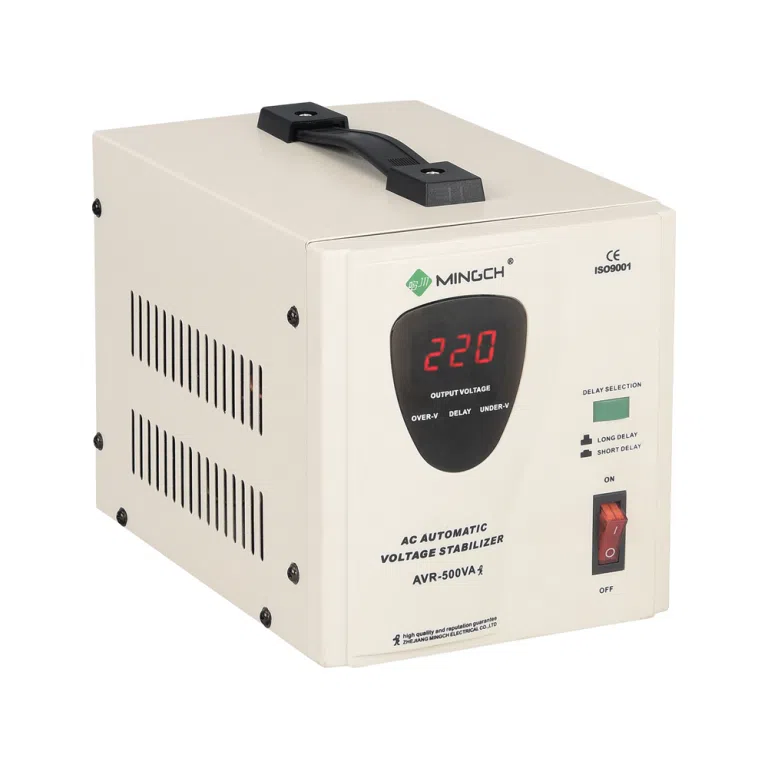
- ✅ Built-in overload protection: Prevents appliance burnout during electrical faults.
- ✅ Stable output under unstable grid input: Supports sensitive or high-powered machines.
- ✅ Heavy-duty internal coils: Designed and manufactured in-house for precision.
✅ Custom solutions available: Tailored commercial, industrial, and residential options.
Conclusion: Make the Smart Power Protection Choice
When choosing between a surge protector vs AVR, think beyond just immediate damage. Surge protectors offer quick defense against sudden spikes, while AVRs regulate long-term voltage issues, providing continuous appliance protection.
With MINGCH Electrical’s advanced AVR solutions, you don’t have to choose one or the other—we give you both. Our automatic power regulator systems are trusted worldwide for durability, accuracy, and peace of mind.
Ready to protect your equipment properly? Browse our voltage regulator product range or contact us for a custom solution.


