




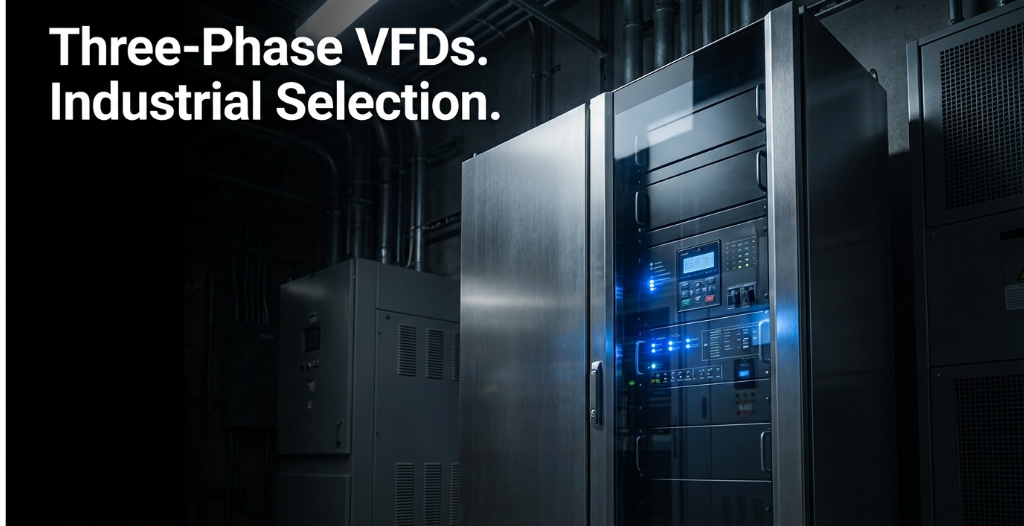
Selecting a three-phase variable frequency drive starts with matching the input voltage, power rating, and site grid conditions to the application. Industrial buyers also need to budget for protection against voltage swings and harmonic interference. This guide walks through the circuit, the voltage options, and the grid-side issues that shape a sound purchase decision.
What Does a Three-Phase VFD Circuit Actually Do?
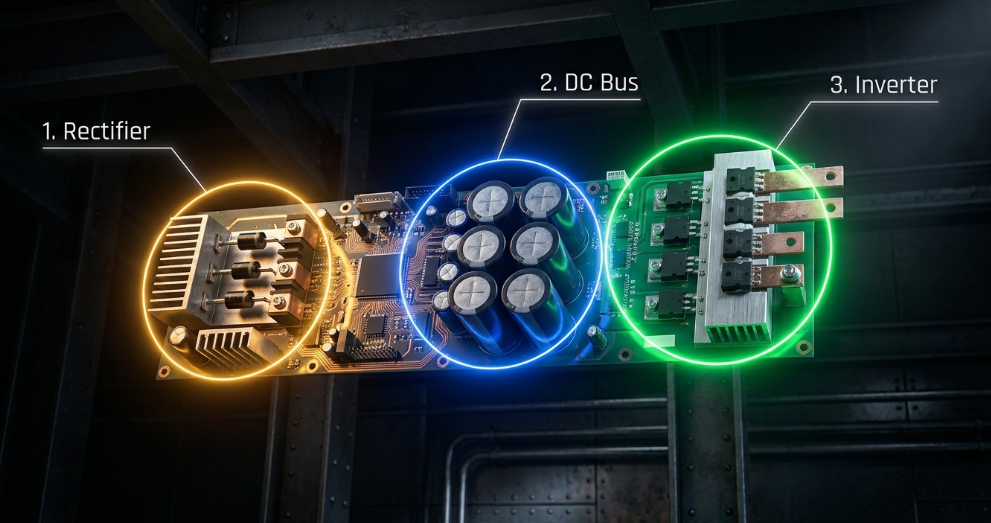
A three-phase VFD circuit converts fixed incoming power into a controlled variable output in three stages. A basic 3-phase variable frequency drive circuit diagram shows a rectifier, a DC bus, and an inverter connected in series.
The Three Building Blocks of the Circuit
The rectifier turns incoming three-phase AC into DC using a diode or thyristor bridge. Capacitors on the DC bus smooth this voltage. The inverter section then switches it back into AC at the frequency the motor needs.
Six-Pulse Rectifiers and Why They Matter for Power Quality
Most standard three-phase variable frequency drive circuits use a six-pulse diode bridge on the input side. This design uses fewer components and is widely applied in industrial drives. However, it draws current in sharp pulses rather than as a smooth sine wave. These current pulses create the harmonic distortion discussed later in this guide.
How Do You Choose Between 380V and 220V Three-Phase Models?

Industrial sites run on different regional voltage standards, so drive selection starts with matching the supply. Variable frequency drive 3 phase models are commonly built around two input classes: 380V and 220V three-phase systems.
Matching Input Voltage to Regional Grid Standards
Three-phase 380V is the standard across much of Asia, the Middle East, and parts of Africa. 220V three-phase systems remain common on specific regional grids and smaller industrial sites. Ordering the wrong voltage class means a drive that cannot run at rated power, or one that trips on constant overvoltage warnings.
Power Range and Budget Planning
Procurement teams should budget for the power range they expect to need over the equipment’s life, not just the current motor size. A 3-phase variable frequency drive vfd sized with headroom for future line expansion avoids a second purchase within a few years.
Why Do Grid Voltage Fluctuations Matter for Three-Phase VFD Buyers?
Weak or aging grids do not always hold voltage within a drive’s rated input window. A dip during a large motor start elsewhere on the same feeder can trip a sensitive drive offline without warning.
Undervoltage and Overvoltage Trip Risk
Undervoltage forces a drive to draw higher current for the same output power, stressing internal components over time. Overvoltage spikes, common after utility switching events, can damage DC bus capacitors gradually until a fault appears.
Pairing a VFD With a Voltage Stabilizer
Facilities on unstable grids often specify a voltage stabilizer ahead of the drive input. This keeps incoming voltage inside the drive’s rated window, regardless of what the utility feed is doing. It is why MINGCH pairs its three-phase drives with its own voltage regulator line for site-level protection.
How Should Buyers Address Harmonic Interference?
Every 3-phase variable frequency drive circuit built around a standard rectifier produces some harmonic current on the input side. Left unmanaged, this distorts the voltage waveform for every other device sharing the same feeder.
Where Harmonics Come From in a 3 Phase VFD
Six-pulse rectifiers draw current in short, non-sinusoidal pulses instead of a smooth sine wave. This pulsed draw is dominated by the 5th and 7th harmonics. A six-pulse bridge produces harmonics at multiples of the pulse number, offset by one, which is why these two orders stand out.
IEEE Std 519 sets recommended limits on this distortion at the point of common coupling. The typical target is 5 percent total voltage distortion, with individual harmonic limits set lower depending on system strength. Multiple drives sharing one transformer can push a facility past those limits. The usual result is overheating in nearby motors or nuisance trips in sensitive equipment.
Filtering and Active Front End Options
Line reactors and passive filters are the simplest fix, reducing harmonic current at modest cost. Larger installations with strict limits sometimes step up to an active front-end VFD instead. This design controls the input waveform directly rather than filtering it afterward. IEC 61800-3 covers this approach in more detail, since it sets EMC requirements for adjustable speed drives.
Why Do Industrial Buyers Choose MINGCH Three-Phase Drives?
MINGCH Electrical builds three-phase variable frequency drive units from 0.75kW to 500kW. Both 380V and 220V input classes come from one factory. Every unit carries CE-LVD certification and is tested against IEC 61800-5-1 requirements. An in-house R&D team handles custom voltage and communication configurations. Distributors sourcing for regions with weaker grids can pair MINGCH drives with the Group’s own voltage regulators and power distribution protection. All of it ships backed by one factory.
Explore the full three-phase VFD range to compare 380V and 220V models. You can also download the product catalog for detailed input and output specifications.

Frequently Asked Questions
What Is the Difference Between 380V and 220V Three-Phase Drives?
380V three-phase is the standard grid voltage across much of Asia, the Middle East, and Africa. 220V three-phase serves specific regional grids and smaller sites instead. Ordering the correct voltage class avoids underpowered operation or nuisance overvoltage trips.
Why Do Three-Phase VFDs Cause Harmonic Distortion?
Standard six-pulse rectifiers draw current in sharp pulses instead of a smooth wave, producing 5th and 7th harmonic currents. IEEE Std 519 sets recommended limits on this distortion, and line reactors or filters bring most installations back into compliance.
Does a Three-Phase VFD Need a Voltage Stabilizer?
On stable grids, no. On weak or fluctuating grids, pairing a drive with a voltage stabilizer prevents undervoltage trips. It also protects the drive’s DC bus from overvoltage spikes during utility switching events.
How Much Power Range Should Buyers Plan For?
Budget for the power range expected over the equipment’s life, not just the current motor size. Specifying headroom avoids a second procurement cycle if production lines expand within a few years.


